Hypoallergenic earrings


What hypoallergenic earrings really mean
There is no legal test that makes an earring "hypoallergenic". The word simply means the jewelry is less likely to cause a reaction, and that depends almost entirely on the metal touching your skin. The most common trigger is nickel, a metal often hidden in cheap alloys and under plating. So instead of trusting a label, look at the material.
That is how we build this collection. Every piece here uses one of three materials known for being kind to sensitive ears: implant-grade titanium, 316L surgical stainless steel or 925 sterling silver. We list the exact metal on each product page, including what sits under any gold-tone finish. No earring can be guaranteed reaction-free for everyone, and we won't pretend otherwise. If you have a severe or diagnosed allergy, a dermatologist can test you and tell you which metals to avoid.
Hypoallergenic metals for earrings, compared
| Material | Nickel | Good to know |
|---|---|---|
| Implant-grade titanium | No added nickel | Very light; the usual choice for the most sensitive ears |
| 316L surgical steel | Contains nickel, tightly bound in the alloy | Durable and affordable; most people wear it comfortably, very sensitive ears may still react |
| 925 sterling silver | Normally none; the rest of the alloy is usually copper | Bright tone; tarnishes over time and needs gentle cleaning |
| Gold-plated finish | Depends on the base metal | The plating wears with time, so the metal underneath matters |
For a deeper comparison, read our guide on surgical steel vs titanium earrings. If you love a warm color, our article on whether gold-plated jewelry tarnishes explains how long plating lasts and why the base layer counts.
How to choose earrings for sensitive ears
Start with the metal that has worked for you before. If even good steel has made your lobes itch, go straight to titanium: our titanium stud earrings are a simple, light everyday pair. If steel has always been fine, our stainless steel stud earrings are tough and easy to care for.
Then think about contact. Studs and huggies touch only a small area, while hoops and sleepers rest on the lobe all day. Hypoallergenic sleeper earrings and hypoallergenic post earrings are both good for day and night, as long as the post and back are made of the same safe metal. A plastic or silicone back is fine; a mystery-metal butterfly is not.
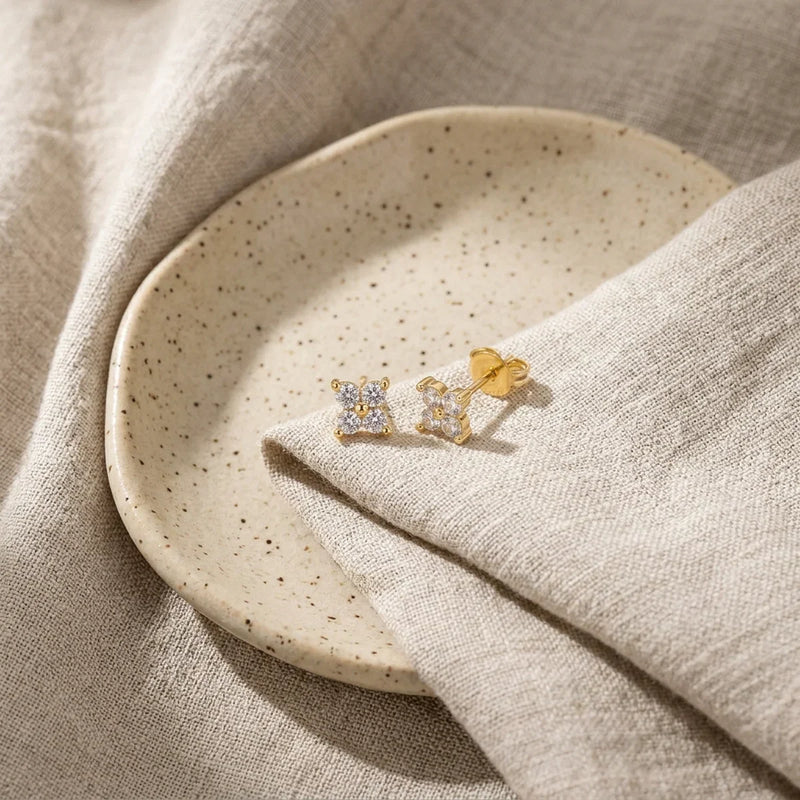
Finally, choose the look. Hypoallergenic silver earrings feel cool and crisp, gold-tone titanium or steel gives warmth, and a small stone in cubic zirconia adds sparkle without changing the metal underneath.
Care that keeps sensitive ears happy
Clean jewelry is part of comfort. Wash your earrings now and then with warm water and a drop of mild soap, rinse and dry them well. Avoid perfume, hairspray and pool water while you wear them, since residue can irritate skin and dull finishes. Store each pair separately so the posts stay clean.
Take your earrings out if a lobe becomes red, itchy or swollen and give the skin time to calm down. If the reaction returns or is strong, see a dermatologist rather than switching metals at random. Our guide to the best earrings for nickel allergy covers the signs to watch for and the questions worth asking.
Who they're for and when to wear them
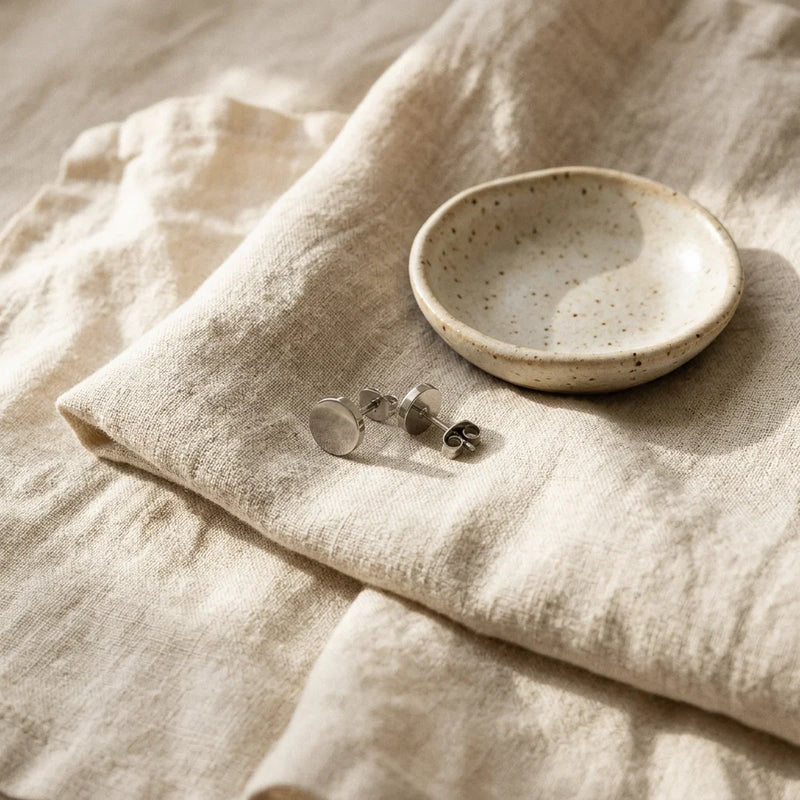
Hypoallergenic earrings for women and men look exactly like any other pair. Hypoallergenic earrings mens styles tend to be small studs and plain hoops in steel or titanium, while our women's pieces range from tiny dots to bolder rings. The difference is what touches the skin, not the design.
They are the smart gift when you don't know someone's skin: a pair of titanium studs suits a teenager with new ears, a colleague who never wears jewelry or a partner who only reaches for silver. At the office, a pair of stainless steel hoop earrings adds polish without fuss; in the evening, swap to a stone stud in the same metal.
Start with a pair you can forget you're wearing
The goal is simple: earrings you put on in the morning and don't think about again until night. Pick your metal, choose a shape and build from there. When you find a material your skin likes, stick with it, and every new pair becomes an easy decision. Try one pair for a few days before adding more, so you know exactly how your skin responds. From there, the only question left is style: a tiny dot for every day, a bolder hoop for the weekend, or a sparkling stud when you want to dress things up a little.