Does gold plated jewelry tarnish? Why it happens and how to prevent it
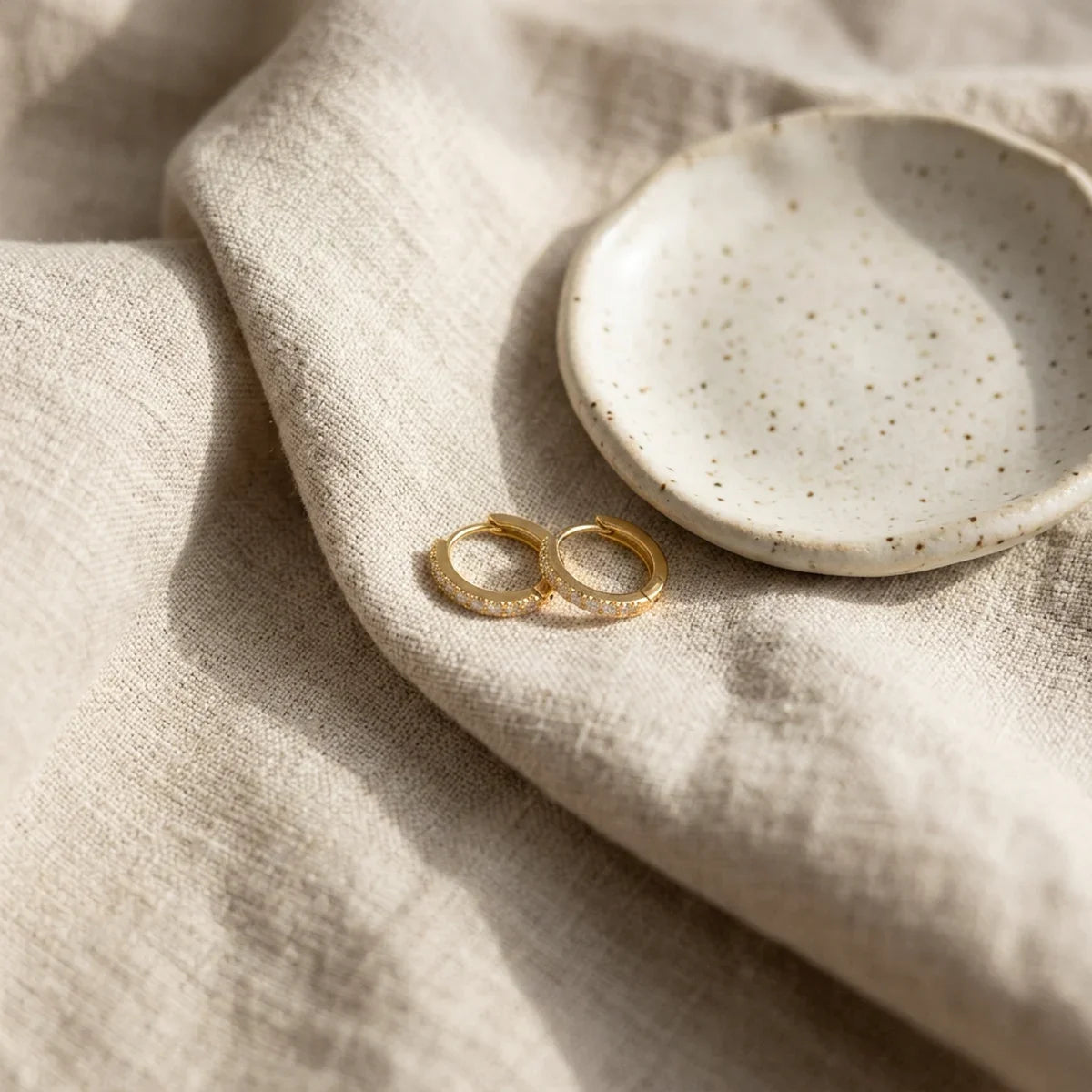
Does gold plated jewelry tarnish? Yes, eventually, but the gold layer is rarely the real culprit. Over time the thin plating wears down or lets the base metal underneath react with air, sweat and skincare, which shows up as dullness or dark patches. Thicker plating, simple daily habits and good storage keep your earrings bright for much longer.
Gold plated, vermeil or gold-tone: know what you are wearing
Before you can predict how a pair of earrings will age, you need to know what sits under the shine. "Gold" on a label can describe very different constructions, and each one behaves differently once it meets your skin every morning. Here is a quick comparison of the finishes you will meet most often at this price level.
| Finish | Typical gold layer | Usual base metal | How it tends to age |
|---|---|---|---|
| Gold flash or gold wash | Under 0.175 microns | Brass, copper alloys | Can fade within weeks of regular wear |
| Standard gold plated | Around 0.5 to 1 micron | Brass, copper, stainless steel | Slow fading, faster where it rubs |
| Heavy gold plated | 2.5 microns or more | Brass, stainless steel | Holds colour noticeably longer |
| Gold filled | About 5% of the total weight, bonded with heat and pressure | Brass | Far thicker than plating, wears slowly over years |
| Gold vermeil | At least 2.5 microns over silver | Sterling silver (925) | Long-lasting; silver may darken if exposed |
| Gold-tone PVD coating | Thin but very hard ceramic-metal film | Stainless steel, titanium | Highly resistant to scratches and sweat |
A micron is one thousandth of a millimetre, so even "heavy" plating is far thinner than a sheet of paper. That is why thickness matters so much: every tiny bit of extra gold gives the piece more material to lose before the base metal starts to show.
The base metal matters just as much. Brass and copper are warm, affordable and easy to shape, but they react readily with oxygen and moisture. Stainless steel and titanium are far more stable, so if the plating thins, what peeks through looks grey rather than dark brown or green. Sterling silver, used for vermeil, sits in between: it does not turn green, but it can develop a dark film if it is exposed.
Why gold plated jewelry tarnishes over time
Gold is one of the least reactive metals there is. On its own, it does not rust, corrode or oxidise in everyday conditions. So when people ask why gold plated jewelry tarnishes, the honest answer is that something else is reacting. There are four main reasons.
The base metal moves through the plating
Metal atoms are not perfectly still. Over months, atoms of copper and zinc from a brass core slowly migrate into a very thin gold layer and reach the surface, where they meet oxygen and darken. Jewellers call this diffusion. A thicker layer, or a barrier layer between the core and the gold, slows the process down considerably.
Sweat, skin oils and body chemistry
Sweat contains salts and acids, and its exact makeup varies from person to person. Some people can wear the same pair for a year with barely a change, while others notice dulling in a few weeks. Hot weather, workouts and certain medications can all make the effect stronger.
Cosmetics and household chemicals
Perfume, hairspray, self-tanner, sunscreen and body lotion leave residues that cling to jewellery and slowly attack thin plating. Chlorine in pools and many cleaning products is especially harsh, and so is salt water. Even a quick swim can leave a noticeable difference on a thin finish.
Friction
Plating is a surface coating, so anything that rubs against it wears it away. Earrings have an advantage over rings and bracelets because they touch fewer surfaces, but the inner edge of a hoop, the post that passes through your lobe and the spot where a back clutches the post all see constant contact.
Tarnish, fading or wear: how to tell the difference
People often use "tarnish" for any change in colour, but there are actually three different things that can happen. Knowing which one you are looking at tells you whether a simple clean will help.
- Surface film. The colour looks dull or slightly hazy all over, but the gold tone is still there underneath. This is usually residue from skin, lotion or perfume, and gentle cleaning normally brings the shine back.
- True tarnish. Darker brown, grey or reddish spots appear, often on areas that stay damp, like the post or the back of a stud. This is the base metal reacting through a thin or damaged layer. Cleaning can lighten it, but it rarely disappears completely.
- Worn plating. A different metal colour shows through in patches, typically on edges and contact points. The gold has physically rubbed away. No cleaning method can restore it; only re-plating can.
A quick test: wipe the piece with a soft, dry microfibre cloth. If the cloth picks up a grey or black mark and the piece looks brighter afterwards, you were dealing with a surface film or light tarnish. If nothing changes, the plating has likely worn.
How long does gold plating last on earrings?
There is no single number, because lifespan depends on thickness, base metal, how often you wear the pair and how you look after it. As a rough guide, a gold flash can start fading within weeks of daily use, standard plating usually keeps its look for many months, and heavy plating or vermeil can last years with care.
Earrings generally outlast other plated pieces. A ring rubs against everything you touch, and a bracelet knocks against desks and keyboards all day. A stud or a small hoop mostly just hangs there. The parts most at risk are the ones you handle: the post, the back and any hinge or click mechanism. On those parts, a slightly thicker finish or a stable base metal makes a visible difference after a few months.
Your habits shape the result more than you might think. Two people buying the same pair on the same day can end up with very different earrings a year later, simply because one takes them off before showering and the other sleeps in them every night.
Can you wear gold plated earrings every day?
Yes, you can wear gold plated earrings daily, as long as you accept that daily wear speeds up the natural ageing of the finish. Many people keep one favourite pair on rotation every day for months with good results. The trick is to give the plating as few reasons to break down as possible.
Daily wear works best when you follow a few rules:
- Choose thicker plating or a stainless steel base for pieces you never want to take off.
- Remove them for the shower, the gym, the pool and the beach.
- Take them out at night, especially hoops, which can bend and rub against your pillow.
- Give them a quick wipe before you put them away.
- Rotate between two or three pairs if you can, so each one gets a rest.
Small, close-fitting styles are the easiest everyday choice. Simple studs and huggies have fewer moving parts, catch less on clothes and hair, and sit away from most of the products you put on your face and neck.
Gold plated earrings and allergies
Gold itself very rarely causes a reaction. When someone feels itching, redness or swelling with gold plated earrings, the trigger is almost always the metal underneath, and most often nickel. Nickel allergy is one of the most common contact allergies, and it tends to show up exactly where metal touches skin for long periods, like an earlobe.
As long as the plating is intact, it acts as a barrier. Once it thins or wears through, the base metal touches your skin directly, which is why some people tolerate a new pair perfectly and only react weeks later. If you are allergic to gold plated earrings after a while, worn plating is the first thing to suspect.
In the European Union, nickel release from items that go into a piercing is strictly limited by law, and items in prolonged contact with skin have their own limit. That reduces risk, but it does not make every piece suitable for every ear. If your skin is reactive, look for posts in implant-grade titanium, surgical stainless steel 316L or sterling silver, and read our hypoallergenic earrings selection with that in mind. Remember that "hypoallergenic" means a lower risk, not a guarantee, and anyone with a persistent reaction should talk to a doctor or pharmacist.
How to keep gold plated jewelry from tarnishing
Good care will not make plating last forever, but it can easily double the time your earrings look new. None of these steps take more than a minute.
Last on, first off
Put your earrings on after perfume, hairspray, makeup and moisturiser have dried. Take them off before you wash your face, remove makeup or go to bed. This one habit protects the finish more than any cleaning product.
Clean gently and rarely
For routine care, a dry microfibre cloth after each wear is enough. When the pieces need more, use a few drops of mild, fragrance-free soap in lukewarm water, dip them briefly, rub softly with your fingertips or a very soft brush, rinse and pat completely dry. Let them air-dry for a while before storing them, because trapped moisture speeds up tarnish.
Store them dry and apart
Air and humidity are slow but steady enemies. Keep each pair in a small, closed pouch or a lidded box with separate compartments, away from the bathroom. A zip bag with the air pressed out works well for pieces you wear less often. Keeping pairs apart also stops harder metals and stones from scratching the plating.
What to avoid
- Toothpaste, baking soda and abrasive polishes, which scratch away the gold.
- Silver polishing cloths that contain chemical compounds, which can strip thin plating.
- Ultrasonic cleaners and steam, which can loosen worn plating and glued stones.
- Bleach, chlorine, alcohol-based sprays and harsh household cleaners.
- Paper towels and tissues, whose fibres can be surprisingly rough on soft gold.
If you also own silver pieces, they need slightly different treatment. Our step-by-step guide on how to clean silver earrings covers the methods that suit sterling silver but would be too strong for plated gold.
Can you fix tarnished gold plated jewelry?
It depends on which of the three problems you have. A surface film comes off with the gentle soap-and-water method above. Light tarnish often fades with careful cleaning, although a faint shadow may remain. Worn plating, however, cannot be cleaned back: the gold is simply gone from that spot.
For a pair you love, re-plating is an option. Many jewellers can clean the piece, strip the old finish and apply a fresh layer of gold. The result can look like new, but it is worth asking about thickness, because a thin replacement layer will wear just as fast as the original. For lower-priced pieces, the cost of re-plating can be close to the cost of a new pair, so weigh it up honestly.
Some people use clear nail polish on posts or inner hoop edges to slow wear. It can help briefly, but it chips, looks cloudy and can irritate sensitive skin, so it is a temporary fix rather than a solution. A better long-term answer is to choose the right construction from the start.
What to check before you buy gold plated earrings
The easiest way to avoid tarnish is to pick well in the first place. A few minutes with the product description tells you far more than the photos ever will.
- The base metal. Stainless steel, titanium and sterling silver stay more stable than brass if the surface ever wears. Brass is not a bad choice, but it rewards careful handling.
- The type of finish. Look for words like plated, vermeil or PVD. A product that only says "gold colour" with no further detail gives you nothing to judge.
- The post. This is the part that sits inside your skin for hours. A titanium, steel or silver post is a sensible choice for sensitive ears, whatever the front is made of.
- The shape. Smooth, simple forms are easier to wipe and dry than intricate textures, where residue and moisture collect.
- How you plan to wear them. A pair for weddings and dinners can be more delicate than one you never take off.
If you are still deciding between styles, our overview of the main types of earrings helps you match shape and size to the way you actually live, which in the end is what keeps a finish looking good.
Earrings at Odelys to wear and keep bright
If you want gold tones you can wear often, small and close-fitting styles are the easiest to look after, and stable base metals give you extra peace of mind. For every shape, browse our gold hoop earrings or the full gold earrings collection. These pieces are a good place to start:
- Small gold hoop earrings: a light, everyday hoop that sits close to the lobe and avoids most friction.
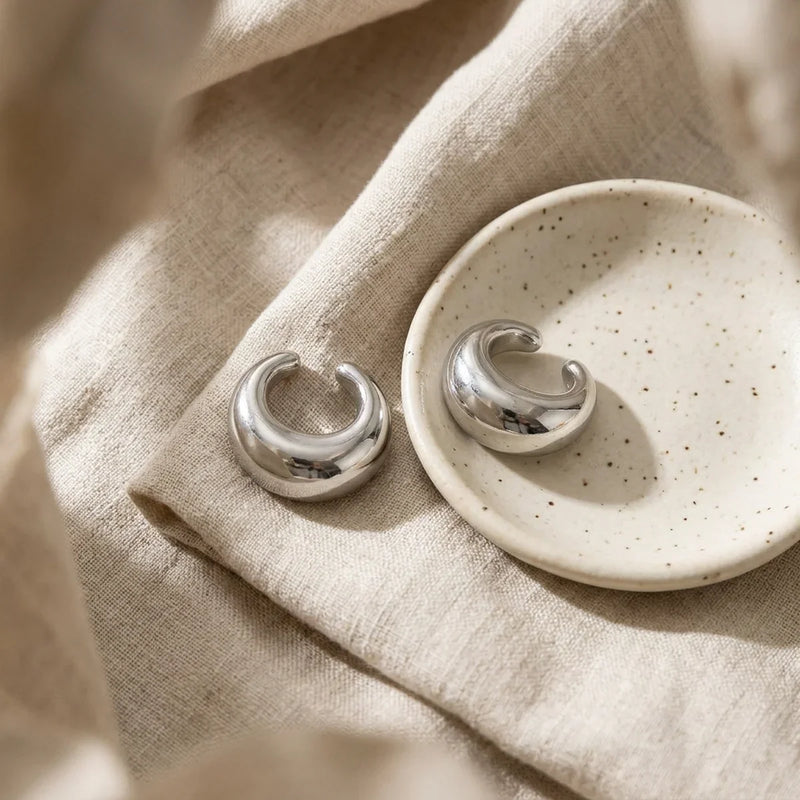
- Chunky gold hoops: a bolder shape for days out, best stored separately so the surface stays smooth.
- Rose gold hoop earrings: a warmer tone that follows the same care routine as yellow gold-tone pieces.
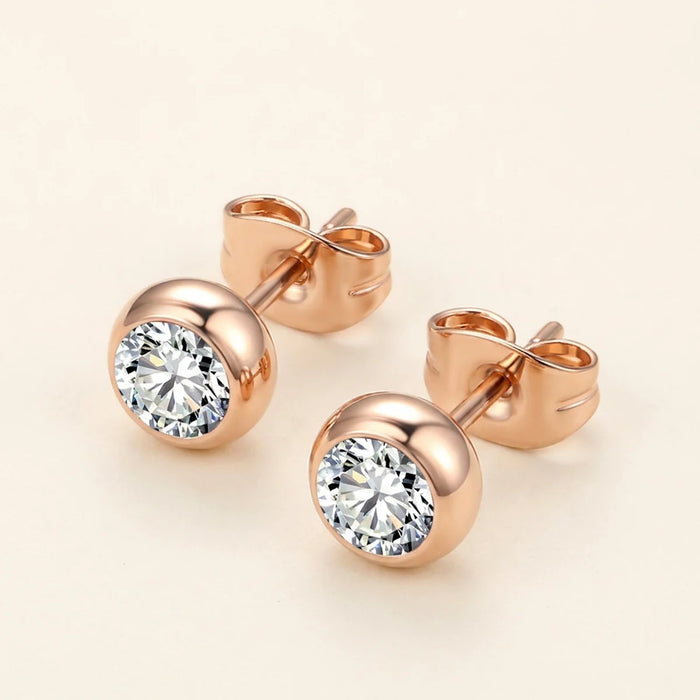
- Rose gold stud earrings: a discreet stud with few moving parts, easy to wipe after every wear.
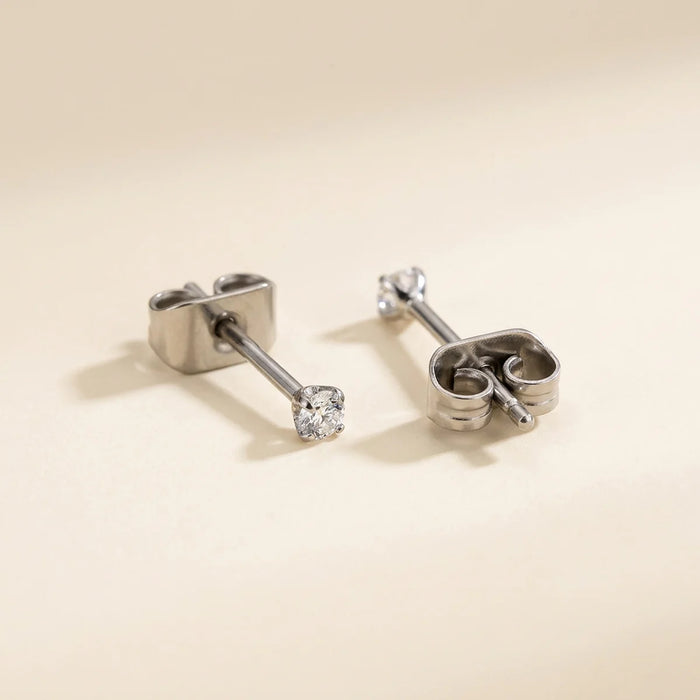
- Titanium stud earrings: a stable metal choice for sensitive ears and for pairs you rarely take off.
Whatever you choose, check the product page for the exact base metal and finish, then follow the last-on, first-off rule. A little attention every day does far more than any rescue clean later on.