Surgical steel vs titanium earrings: which metal is right for your ears

Surgical steel vs titanium earrings comes down to nickel. Surgical steel (316L) is durable and affordable but contains around 10–14% nickel, released only in small amounts. Implant-grade titanium has no added nickel, is lighter and suits sensitive or allergic ears better. For mild sensitivity steel often works; for a confirmed nickel allergy, choose titanium.
Surgical steel vs titanium earrings at a glance
Both metals are popular for everyday earrings, and both are far kinder to ears than unlabelled costume metal. They are not the same, though. Here is the short version before we go into detail.
| Surgical steel (316L) | Implant-grade titanium (ASTM F136 / F67) | |
|---|---|---|
| Nickel content | Around 10–14%, bound in the alloy | No added nickel |
| Nickel release | Low; must meet EU REACH limits | Negligible |
| Best for | Healed ears, mild sensitivity | Nickel allergy, very sensitive skin, new piercings |
| Weight | Heavier | About 40% lighter |
| Colour | Bright, polished silver | Slightly darker grey; can be anodised |
| Tarnish | Resists tarnish | Does not tarnish |
| Hardness and scratches | Hard, holds a high polish | Strong, may show fine scratches over time |
| Price | Usually lower | Usually a little higher |
In short: steel is a great everyday metal for most people, while titanium is the safer bet when nickel is a problem. The rest of this guide explains why, so you can choose with confidence. If titanium sounds right for you, our titanium earrings list the grade on every piece.
What surgical steel really is
"Surgical steel" is not a single, strictly defined material. In jewellery the term almost always means 316L stainless steel, and sometimes 316LVM, a vacuum-melted version with fewer impurities. The "L" stands for low carbon, which improves corrosion resistance.
Stainless steel is an alloy of iron with chromium, nickel and molybdenum. Each ingredient has a job:
- Chromium forms a thin, invisible passive layer on the surface. This layer is what makes the steel "stainless".
- Nickel stabilises the structure of the steel, making it tough and easy to polish.
- Molybdenum adds extra resistance to corrosion, especially from salt and sweat.
The name "surgical" comes from the fact that similar grades are used for surgical instruments and some medical devices. For implants, the relevant standard is ASTM F138. Most fashion jewellery is not certified to that standard, so "surgical" on a label tells you the grade of steel family, not that the piece went through medical testing.
Good 316L steel has plenty going for it. It is hard-wearing, holds a mirror shine, resists tarnish, and allows fine details at an accessible price. It is also a much better choice than brass, copper alloys or unknown base metals, which are common in very cheap earrings and can release far more nickel.
Other steel grades exist too. You may see 304 stainless steel on some labels. It is also widely used, but it lacks molybdenum and is slightly less resistant to corrosion than 316L, so for earrings that stay in your ears all day, 316L is the grade to look for.
What implant-grade titanium is
Titanium used for quality earrings usually meets one of two medical standards:
- ASTM F136: Ti-6Al-4V ELI, an alloy of titanium with aluminium and vanadium. It is used for orthopaedic and dental implants. ELI means extra low interstitials, a cleaner, purer alloy.
- ASTM F67: unalloyed, commercially pure titanium, also used in medicine.
Neither contains added nickel. Titanium also forms a very stable oxide film on its surface almost instantly when exposed to air. That film is what makes it so unreactive with skin and sweat.
Be careful with vague labels. "Titanium" without a grade, "titanium steel" or "titanium colour" may describe a coating or a different alloy altogether. Titanium steel, in particular, is often just stainless steel with a marketing name. If a shop sells true implant-grade titanium, it will usually say so clearly.
Titanium is also the material professional piercers most often choose for fresh piercings, precisely because it is so well tolerated. Its light weight and strength make it comfortable for long wear, and it can be anodised into gold-tone, blue, purple and other colours using electricity alone, without plating or dyes.
One more practical difference: titanium is harder to machine than steel. That is part of why titanium pieces tend to cost a little more and why designs are often clean and minimal rather than heavily detailed.
Surgical steel earrings and allergy: the nickel question
This is the heart of the surgical steel vs titanium earrings debate, and it deserves an honest answer. Can surgical steel earrings cause an allergy? They can, for some people, even though most people wear them without any issue.
Here is why. In 316L the nickel is locked inside the alloy and protected by the chromium layer, so very little reaches your skin. But "very little" is still something. An allergic reaction depends on two things: how much nickel is released and how sensitive you are. A dose that means nothing to one person can trigger itching and redness in another.
The EU regulates this through REACH, which limits how much nickel jewellery may release onto skin, measured with the EN 1811 test:
- for posts and parts inserted into pierced ears: no more than 0.2 µg/cm² per week;
- for other parts in direct and prolonged contact with skin: no more than 0.5 µg/cm² per week.
Good 316L earrings sold in the EU must stay under these thresholds. That protects most people from becoming sensitised. It does not promise that someone who already has a strong nickel allergy will never react.
Several things can increase nickel release from steel:
- low-quality steel or poor finishing;
- scratches, wear and damaged surfaces;
- sweat, salt water and long, continuous wear;
- an irritated or freshly pierced lobe, where the skin barrier is weaker.
So, which should you pick? If you have never reacted to anything, quality steel is usually fine. If you have mild sensitivity and steel has worked for you before, keep using it. If you have a diagnosed nickel allergy, or you have reacted to steel in the past, titanium is the more cautious choice. Our guide to the best earrings for nickel allergy covers the other options too, from niobium to sterling silver.
A word on symptoms: a nickel reaction usually appears a day or two after contact, with itching, redness, small bumps or flaking around the hole. If that sounds familiar, it is worth checking with a dermatologist rather than guessing.
Weight, comfort, look and durability
Allergy is not the only difference. When you wear earrings every day, small details add up.
Weight and comfort
Titanium is about 40% lighter than steel. With small studs you might not notice, but with larger hoops or several pieces along the ear, the difference is real. Lighter earrings pull less on the lobe and are more comfortable from morning to night.
Colour and finish
Polished steel has a bright, cool silver shine. Titanium is a touch darker and greyer in its natural state. Both can be gold-tone: steel through plating, titanium either through plating or through anodising, which changes the colour of the oxide layer itself. If you love a crisp mirror finish, steel has a slight edge. If you prefer a softer, more matte look, titanium is lovely.
Durability
Both metals are tough and corrosion-resistant. Neither tarnishes like sterling silver, and both handle daily life well. Steel is a little harder and resists fine scratches; titanium is very strong for its weight but its surface can pick up light marks over the years. Either way, these are earrings you can wear daily for a long time.
Water and sport
Both cope well with water, but titanium is the more forgiving choice for swimming, sea water and sweaty workouts. If your ears are sensitive, take steel earrings off for the pool and the gym.
Which one should you choose?
There is no single winner. The right metal depends on your ears and how you wear your earrings. Use this as a quick guide:
- Confirmed nickel allergy: titanium.
- Mild sensitivity, no diagnosed allergy: titanium or quality 316L steel; start with titanium if unsure.
- No sensitivity at all: either; steel offers more polished designs at a lower price.
- New piercing: implant-grade titanium fitted by a professional piercer.
- Sleeping in your earrings: light titanium studs with flat backs.
- Large hoops or statement pieces: titanium if weight bothers you, steel if you want a bright shine.
What about value? Steel usually costs a little less, and for ears that tolerate it, it is excellent value: it lasts, keeps its shine and rarely needs care. Titanium costs a little more, but if it means you can actually wear your earrings all day without itching, that difference pays for itself quickly. A practical approach many people like is to keep titanium for the pieces you wear constantly, such as everyday studs or small hoops you sleep in, and use steel for pieces you wear for a few hours at a time.
Whatever you choose, look at the whole earring. The post, the hoop wire or the hook is what enters your piercing, and the back sits against your skin all day. A titanium post with a cheap metal back can still cause trouble. Our guide to types of earring backs helps you pick a closure that suits sensitive ears.
Common myths about steel and titanium
A lot of half-truths circulate about these two metals. Clearing them up makes the choice much easier.
"Surgical steel is nickel free"
It is not. 316L contains nickel by design. What it offers is low nickel release, which is a different thing. Many people never react, but "surgical" does not mean "allergy-proof".
"All titanium is the same"
Not quite. Implant-grade titanium made to ASTM F136 or F67 is very different from a titanium-coloured coating or a product called "titanium steel". Look for the grade, not just the word.
"If I reacted once to steel, I will react to all metals"
Not necessarily. Many people who react to cheap steel or base-metal jewellery are perfectly comfortable in titanium. A patch test can tell you precisely which metals to avoid.
"Gold-tone plating protects me from the metal underneath"
Only for a while. Plating is a thin layer, and it wears down, especially on posts that slide in and out of your piercing every day. For sensitive ears, what matters is the base metal. A gold-tone finish over titanium is a safer choice than the same finish over brass.
"Hypoallergenic means I cannot react"
Hypoallergenic is not a regulated term for jewellery. It means a lower risk, not zero risk. That is why we always name the actual metal next to the word.
"A reaction always shows up straight away"
Usually it does not. Nickel allergy is a delayed reaction, often appearing a day or two after you wear the earrings. If you only look for immediate redness, you might blame the wrong pair or the wrong material.
How to care for steel and titanium earrings
Both materials are low-maintenance, which is part of their appeal. A few habits keep them in good shape and your ears comfortable.
- Clean regularly. Wash posts and hoops with lukewarm water and a drop of mild soap. Rinse and dry thoroughly.
- Avoid harsh products. Skip bleach, strong chlorine and abrasive powders. They can damage plating and dull the surface.
- Dry before storing. Moisture trapped in a pouch is no friend to any jewellery.
- Store separately. Keep pieces apart so they do not scratch each other. Scratches on steel can increase nickel release over time.
- Remove for heavy sweating. Long workouts or saunas are best done without earrings if your skin is reactive.
- Check plating. If a gold-tone layer wears thin on a steel piece, very sensitive ears may start to notice.
Titanium needs even less care: no tarnish, no special cloth, just clean and dry. If you want to compare all our materials side by side, browse the hypoallergenic earrings collection, where every piece lists its metal.
Steel and titanium earrings at Odelys
Want to try both metals? These pieces show what each one does best.
- Titanium studs: light, simple and the safest everyday pick if nickel is a concern.
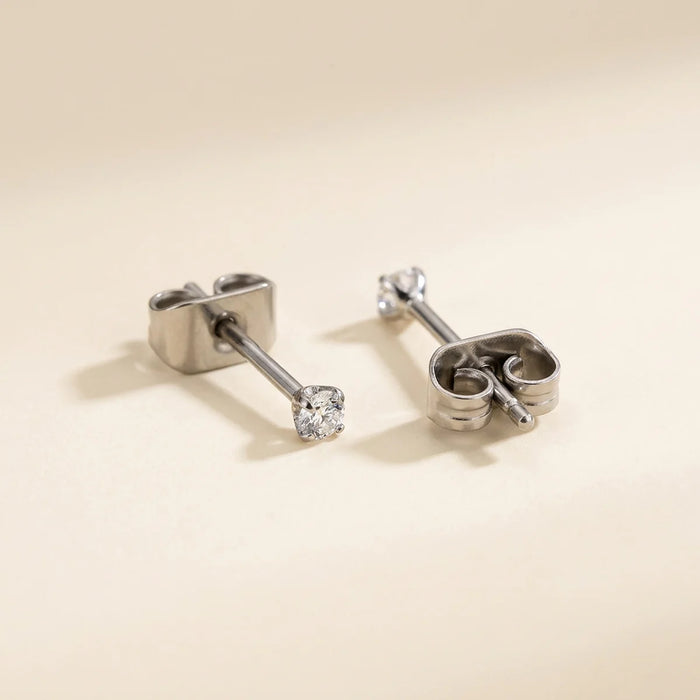
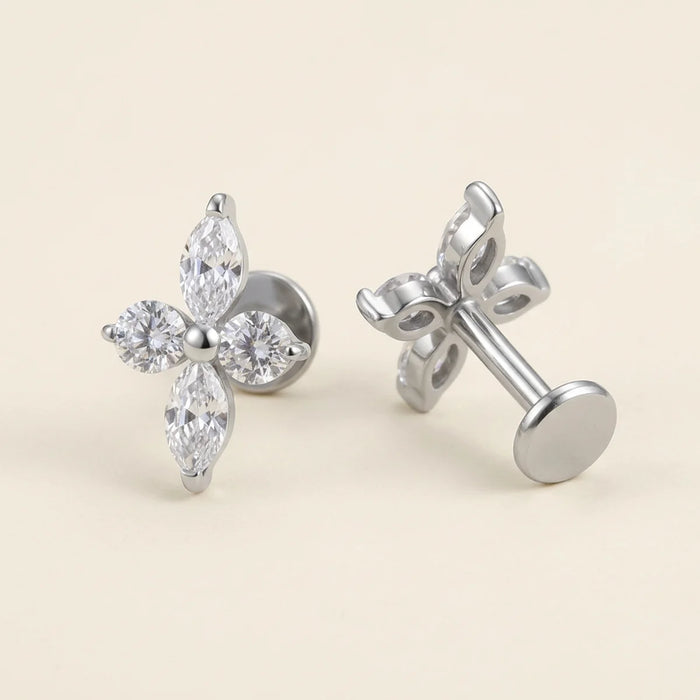
- Titanium flat back earrings: a flat disc behind the ear, comfortable enough to sleep in.
- Surgical steel studs: polished 316L with a bright shine, for ears that are happy with steel.
- Steel hoop earrings: tarnish-resistant hoops you can wear every day.
Each product page states the material of the post and the backs, so you always know what touches your skin.
If your ears still react
Choosing a better metal prevents many problems, but it is not a treatment. If your ears react even to quality steel or to titanium, or if you simply are not sure what is going on, see a dermatologist. A patch test can confirm whether nickel is the cause or whether another substance, such as cobalt, chromium or a skincare product, is to blame.
Seek advice promptly if the skin is weeping, very swollen, painful or looks infected, or if the rash spreads. In the meantime, take your earrings out, keep the area clean and dry, and avoid scratching.
The good news is that most people find a metal that works for them. For many, quality surgical steel is all they need. For those with a nickel allergy, implant-grade titanium usually opens the door to wearing earrings comfortably again.