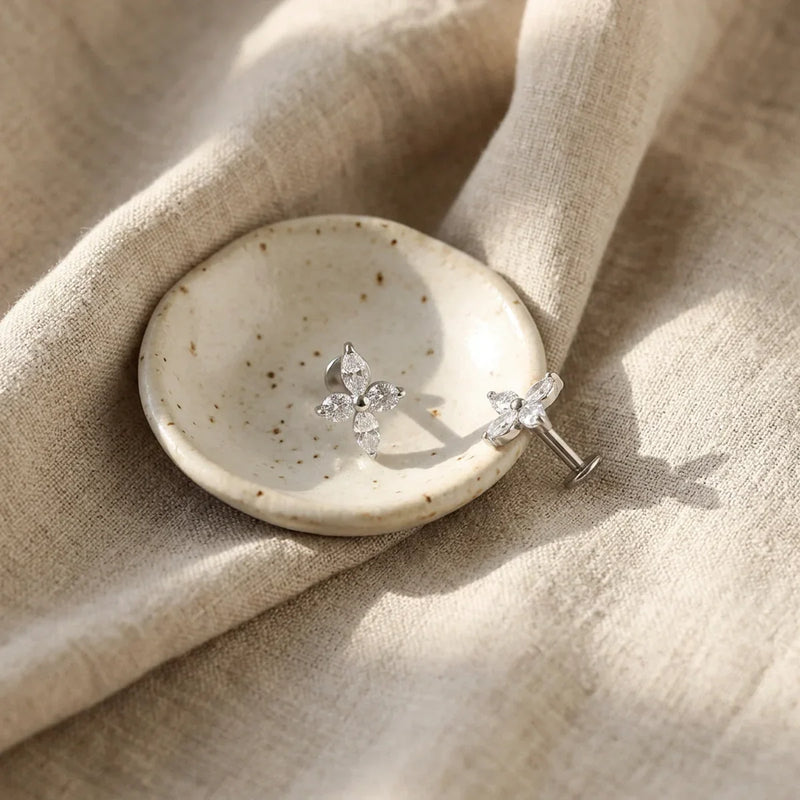
Earrings for everyday wear: how to choose pairs you never take off
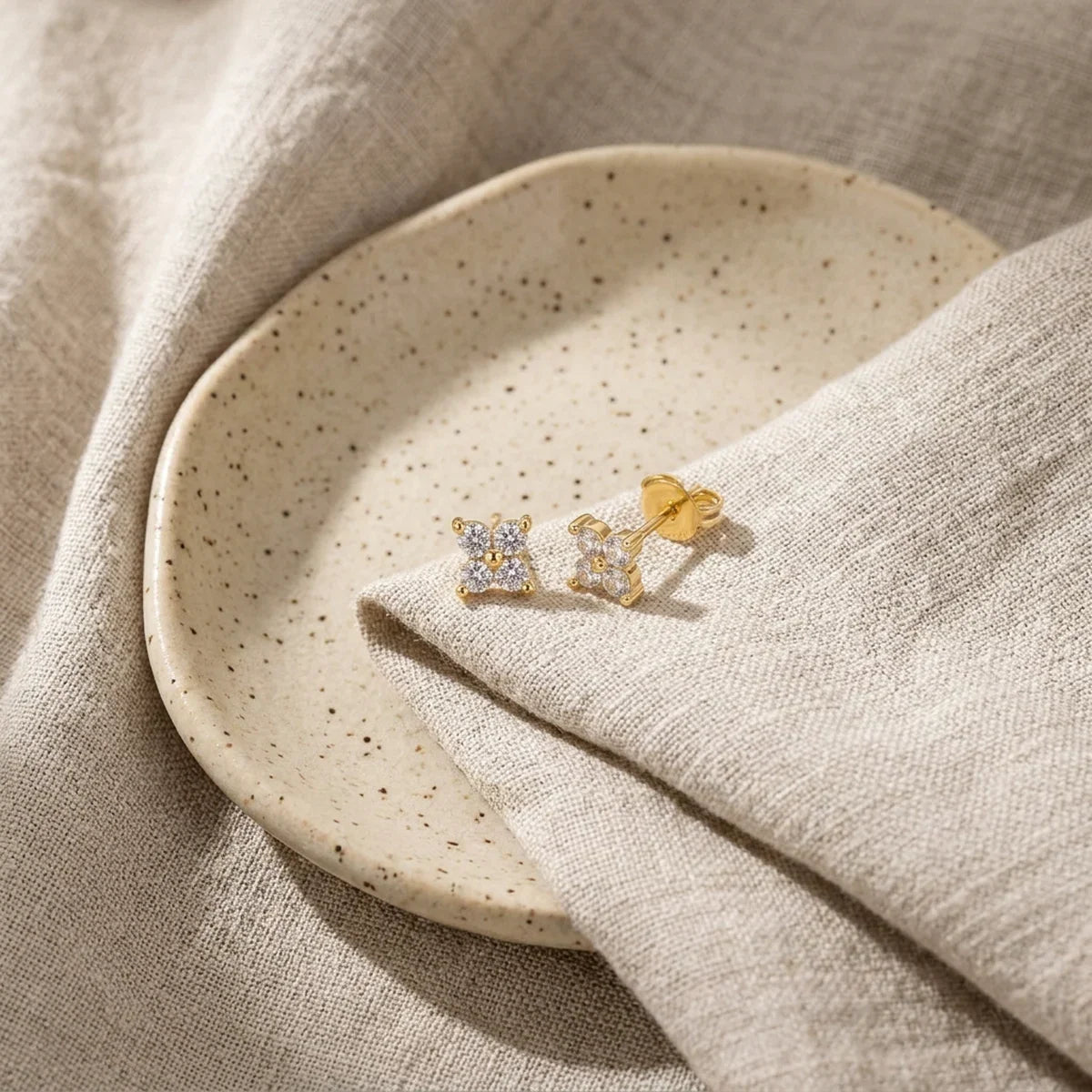
Earrings for everyday wear should be small or close to the lobe, light enough to forget, made of a metal your skin tolerates and fitted with a secure back. Huggies, small hoops and simple studs in titanium, 316L steel or 925 silver tick every box, from the office to the gym bag.
The everyday earring checklist at a glance
Before you look at colours or trends, run any pair through five practical questions. A pair that fails one of them usually ends up in the drawer after a week, however pretty it looked in the photo.
| Question | What works every day | What to keep for occasions |
|---|---|---|
| Size | Studs of 3 to 6 mm, huggies of 8 to 12 mm, hoops up to about 20 mm | Hoops over 40 mm, long chains, chandeliers |
| Weight | Under about 3 g per earring | Heavy statement pieces |
| Metal | Implant-grade titanium, 316L steel, 925 silver | Unspecified alloys if your skin reacts |
| Back | Hinged huggie, screw back, threadless flat back, secure push back | Loose butterfly backs, fish hooks without stoppers |
| Shape | Smooth, rounded edges that do not snag | Open prongs, fringes, sharp points |
Use the table as a filter rather than a rule. Plenty of people wear a slim 30 mm hoop to work every day without a second thought. The point is to know which features make a pair easy to live with, so you can pick on purpose.
Why some earrings work all day and others do not
The earrings you reach for every morning tend to share one quality: you stop noticing them. That comes down to three things working together.
Weight and balance
Your lobe carries every gram for eight, ten or twelve hours. A heavy drop pulls the piercing downwards, stretches it over time and can leave the lobe sore by the evening. Light pieces that sit close to the ear spread their weight across the hole and stay put when you turn your head, pull on a jumper or take a call.
Nothing to catch
Daily life is full of things that snag: scarves, hair ties, headphones, a toddler's hand, a seat belt. Smooth, closed shapes such as huggies and dome studs slide past fabric and hair. Open settings, long chains and fringes are lovely for an evening, but they are the first to tangle on an ordinary Tuesday.
Skin comfort
If your ears itch or turn red after a few hours, the metal is usually the reason, not the style. Nickel is one of the most common contact allergens, and cheap alloys often contain it. Choosing a material you know you tolerate matters more for everyday earrings than for anything you only wear twice a year.
Your routine, not the trend
Finally, think about your own day. Someone who cycles to work, wears a helmet and changes for the gym at lunch needs different earrings from someone who sits at a desk and goes out for dinner twice a week. Start from what you actually do between waking up and going to bed, and the right size, shape and closure become obvious.
The best styles for daily wear
Some shapes are simply built for routine. These four cover almost every face, outfit and job.
Huggies
Huggies are small, thick hoops that hug the lobe. A hinged clicker closes with one press, which makes them quick to put on half asleep and hard to lose. They come plain or with a row of stones, so a single pair can look calm in a meeting and still feel finished at dinner. Browse the full range of huggie earrings if this is your style.
Small studs
A 3 to 5 mm stud is the most discreet earring there is. A round dot, a tiny star or a small stone in a bezel setting works with a T-shirt, a suit or sportswear. Studs are also the easiest choice for a second or third lobe piercing. You can find dots, stones and shapes in our stud earrings collection.
Small hoops
A slim hoop of 12 to 20 mm adds a little movement without the weight of a big hoop. Look for a smooth finish or a fine line of zirconia, and a closure that clicks rather than a thin wire you have to thread through the hole. Our hoop earrings range runs from tiny to oversized, so check the diameter before you choose.
Pearl studs
A small pearl on a stud is the classic polished everyday earring. It suits office dress codes, weddings and weekends equally well. Keep pearls away from perfume and hairspray, and they will keep their soft glow for years.
Choosing a metal you can wear all day
The metal decides whether your everyday pair stays comfortable and keeps its colour. Here is how the most common options behave.
- Implant-grade titanium (ASTM F136): very light, nickel-free and the usual choice for fresh or sensitive piercings. It does not tarnish.
- 316L stainless steel: durable and affordable. It contains a small amount of nickel that is bound into the alloy, and most people wear it without issues. It handles daily wear and water splashes well.
- 925 sterling silver: 92.5% silver, bright and soft. It can darken with air and skin contact, but a quick polish brings it back.
- Gold-plated or gold-tone: a thin gold layer over steel, silver or alloy. It gives the warm colour at an accessible price, but the layer wears with friction, sweat and cosmetics.
If you have reacted to earrings before, start with titanium or a clearly labelled 316L steel, and read our guide to the best earrings for nickel allergy. Every piece in our hypoallergenic earrings collection lists its metal on the product page.
Backs and closures that stay put
The back is the part you never see and the part that decides whether you lose an earring on the bus. For daily wear, these are the most reliable.
- Hinged huggie or clicker: the hoop closes on itself with a click. Nothing to drop, nothing to fiddle with.
- Screw back: the back screws onto a threaded post. Slower to put on, very secure, and good for children and sports.
- Threadless flat back: a pin with a slight bend pushes into a flat-backed post. Comfortable for sleeping on and popular for cartilage.
- Push back: the classic butterfly. It is fine when it grips firmly, but check it now and then, because it loosens over time.
A good tip: when a butterfly back starts to slide too easily, gently squeeze its two loops closer together, or replace it with a silicone-lined back. Our guide to the types of earring backs shows each closure in detail.
Size, face shape and where to wear them
There is no strict rule linking face shape to earrings, but a few observations help you pick a flattering everyday size.
Size by lobe and piercing
For a huggie, measure the distance from the hole to the edge of your lobe. If it is about 4 mm, an 8 mm huggie sits snugly; a 10 or 12 mm one hangs a little lower and shows more. For upper-lobe and helix piercings, smaller is almost always better: 6 to 8 mm huggies or 3 mm studs. Our huggie sizes guide explains how to measure in two minutes.
Balance with your features
Rounded huggies soften an angular jaw, while slim hoops and vertical drops lengthen a round face. If you wear glasses every day, small studs and huggies stay out of the way of the arms. With short hair, everything shows, so even a 3 mm stud makes a statement; with long, loose hair, a slightly larger hoop helps your earrings peek through.
One pair or a small stack
Many people wear a single pair on the lobe. If you have more than one piercing, a simple everyday stack works well: a huggie in the first hole, a tiny stud in the second, and perhaps a small hoop higher up. Keep to one metal colour, or deliberately mix two, and vary the sizes from large at the bottom to small at the top.
Can you sleep, shower and work out in everyday earrings?
This is the question everyday wearers ask most, and the honest answer is: it depends on the earring and on you.
- Sleeping: small studs with flat backs and snug huggies are the most comfortable to sleep in. Bigger hoops and butterfly backs can press into the skin, bend or snag on pillowcases. If you get red or sore lobes, take them off at night.
- Showering: titanium and stainless steel tolerate water well. Soap and shampoo can still leave a film, so rinse and dry them now and then. Silver and gold-plated pieces last longer if you take them off before the shower.
- Swimming: chlorine and salt water are hard on silver and plating. Remove earrings before the pool or the sea.
- Sport: flat studs and huggies are safest. Avoid anything that dangles or can be caught by a ball, a racket or a helmet strap.
Whatever you choose, give your piercings a break from time to time and clean the posts, especially if you wear the same pair for weeks.
Caring for earrings you wear every day
Everyday earrings work harder than any other jewellery you own. A two-minute routine keeps them comfortable and shiny.
- Put them on last: after perfume, hairspray, body cream and make-up have dried.
- Wipe them after wearing: a dry microfibre cloth removes sweat and skin oils before they dull the surface.
- Clean the posts weekly: a little mild soap and lukewarm water, then dry completely.
- Store them separately: a small pouch or a compartment stops hoops from scratching each other and silver from darkening.
- Check the backs: replace any back that slides on too easily before it gives way.
Silver that has darkened can be brought back with a gentle polishing cloth; our guide on how to clean silver earrings walks you through it. If your pairs are gold-plated, read does gold-plated jewelry tarnish to understand what to expect over time and how to slow it down.
Our favourite earrings for everyday wear
These pieces were chosen for size, weight and a closure you can trust from morning to night.
- Gold huggie earrings: domed gold-tone steel huggies with a click closure, from 6 to 14 mm.
- Silver huggie earrings: a neat row of square cubic zirconia, light enough for long days.
- Titanium stud earrings: implant-grade titanium with a small stone, a safe pick for sensitive ears.
- Stainless steel stud earrings: a simple round dot in three sizes, unisex and easy.
- Star stud earrings: tiny 925 silver stars, ideal for a second or third piercing.
- Silver pearl earrings: freshwater pearls on 925 silver posts for a polished everyday look.
Building a small everyday rotation
You do not need a large jewellery box to look put together every day. Three or four well-chosen pairs cover almost any week.
- One plain metal pair: a gold or silver huggie that goes with everything.
- One discreet stud: for days when you want almost nothing, or for sport.
- One pair with a little sparkle: a zirconia huggie or a stone stud that carries you into the evening.
- One softer classic: pearl studs for meetings, family lunches and weddings.
Pick the metal colour you wear most in other jewellery, such as your watch or rings, and build around it. If you love both, choose pieces that come in gold and silver so you can switch without rethinking the whole look. Rotating between pairs also gives each one time to rest, which helps plating and silver last longer.
At the office
Most workplaces welcome small, quiet earrings. A plain huggie or a pearl stud reads as polished on a video call and does not knock against a headset. If you speak on the phone a lot, avoid anything that clicks against the handset, and choose closed shapes over long drops.
On the move and when travelling
Travel days mean scarves, hoods, neck pillows and bags thrown over the shoulder. This is where hinged huggies and screw-back studs earn their place, because they stay closed whatever happens. Pack one spare pair in a small pouch, and keep the backs on the posts so nothing gets lost in the suitcase.
Weekends and errands
Weekends are a good time to wear the pairs you like but cannot always take to work: a coloured stone, a tiny charm on a huggie, or a slightly larger hoop. Keep the weight low if you will be out for hours, and remember that the same everyday rules on snagging apply when you are carrying shopping or picking up children.
From day straight to evening
When there is no time to go home and change, swap only one thing. Replace a plain stud with a zirconia huggie, or add a small drop to a second piercing. A single bright detail near the face is enough to make a day outfit feel like an evening one, without carrying a heavy pair from nine in the morning.
Above all, choose earrings you feel like yourself in. The best everyday pair is the one you put on without thinking and still like when you catch your reflection at the end of the day.
Pieces in this guide
-
 Chunky silver earrings, small bold hoops in 925 sterling$39.00
-
 Silver heart earrings, huggie hoops with cubic zirconia$39.00
-
 Gold huggie earrings$39.00
-
 Silver huggie earrings with cubic zirconia$39.00
-
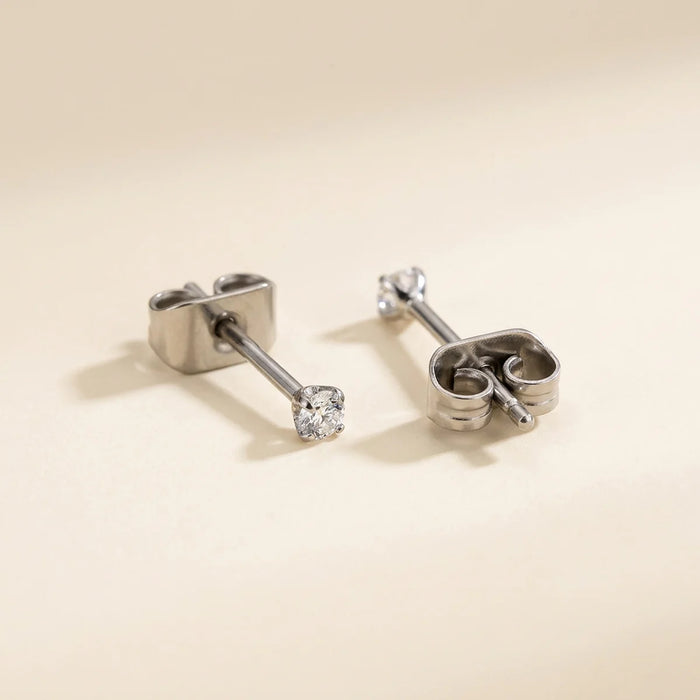 Titanium stud earrings with cubic zirconia$45.00
-
 Stainless steel stud earrings, round dot$28.00
-
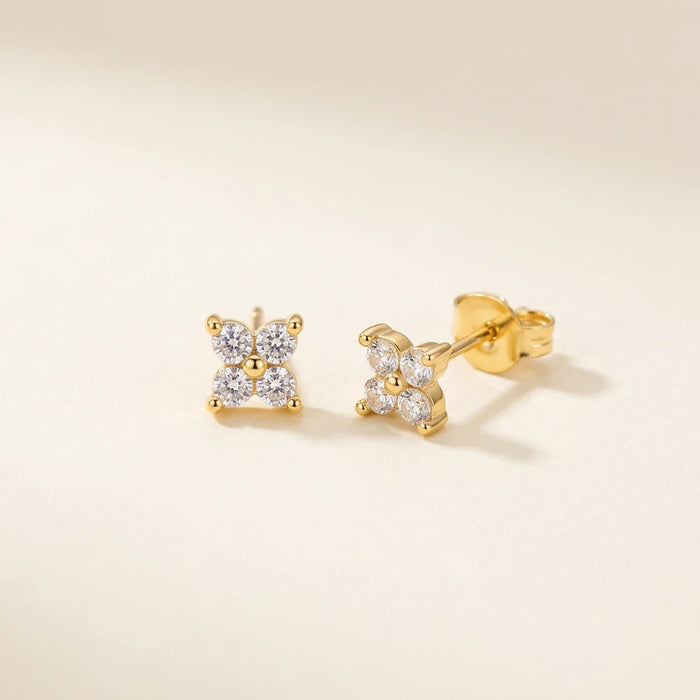 Star stud earrings in 925 sterling silver$45.00
-
 Silver pearl earrings, freshwater pearl studs in 925 sterling$50.00