Types of earring backs: how each closure works and which one to choose
The main types of earring backs are push backs (also called butterfly or friction backs), screw backs, flat backs with threaded or threadless tops, hinged clickers, latch backs, lever backs, hooks and clip-ons. Push backs are the most common; screw backs and flat backs are the most secure and comfortable for sleeping.
Types of earring backs at a glance
The back is the small part you rarely look at and the one that decides whether you lose an earring. Here is a quick comparison of the closures you will meet most often.
| Back | How it works | Security | Comfort | Found on |
|---|---|---|---|---|
| Push back (butterfly) | Metal clutch slides onto a smooth post and grips by friction | Medium | Good | Most studs, small drops |
| Silicone or disc back | Soft or wide back pushed onto the post | Medium to high | Very good | Studs, heavier fronts |
| Screw back | Back screws onto a threaded post | High | Good | Studs, children's earrings |
| Flat back, threaded | Top screws into a hollow post with a flat disc | High | Excellent | Cartilage, lobes, sleeping |
| Flat back, threadless | Bent pin on the top is pushed into the post and held by tension | High | Excellent | Cartilage, curated ear stacks |
| Hinged clicker | Small hinged section snaps shut | High | Very good | Huggies, small hoops |
| Latch back | Wire swings into a small catch | Medium to high | Good | Hoops, larger earrings |
| Lever back | Hinged lever closes over the end of a curved wire | High | Good | Drops, dangles |
| Hook (fish hook) | Open curved wire, sometimes with a stopper | Low to medium | Very good | Dangles, light drops |
| Clip-on | Spring or screw pressure on the lobe | Medium | Varies | Unpierced ears |
The names can vary from shop to shop. "Butterfly", "friction back", "push back" and "scroll back" usually describe the same idea. What matters is the mechanism: friction, thread, tension, hinge or pressure. Once you know which one you are looking at, you know how secure it will be and how to open it without stress.
Push backs: the classic butterfly
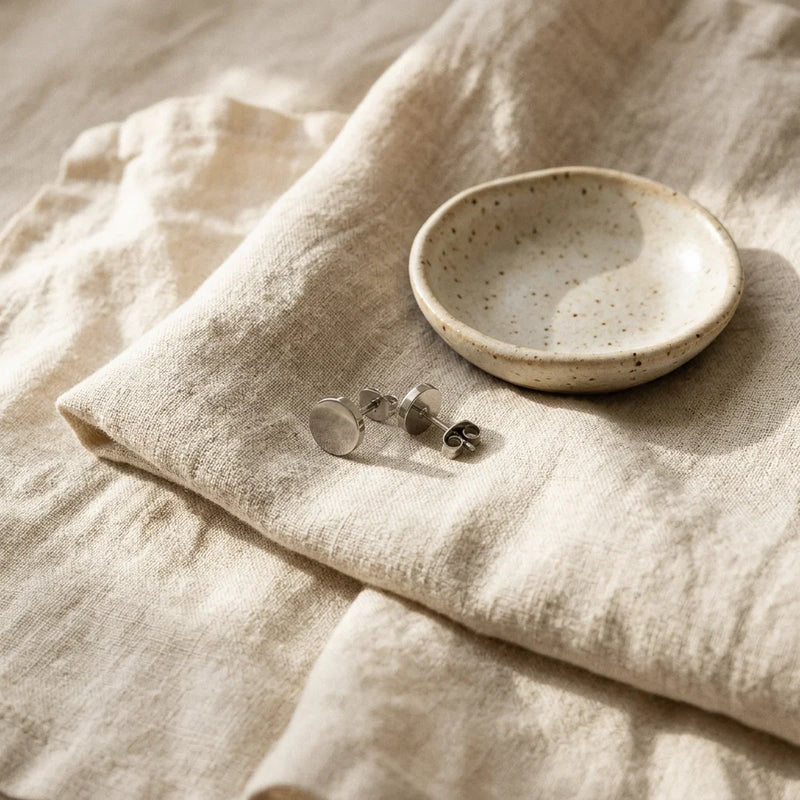
The push back is the closure most people picture when they think of studs. A small metal piece with two curled sides slides onto a smooth post and holds it by friction. To close it, you push it on until it sits snugly behind the lobe; to open it, you pinch the sides and pull it straight off.
The advantages are clear: it is light, fast and fits almost any stud. The weakness is that friction wears out. After months of use the curls open slightly and the back starts to slip. The fix is simple: with clean fingers, gently press the two curls closer together so they grip the post again. If a back is very loose or bent, replace it with a new one of the same size.
A tip for putting push backs on: hold the front of the stud between thumb and index finger, find the end of the post with a fingertip behind the lobe and slide the back on with the other hand, keeping it straight. Pushing it on at an angle bends the curls and wears them out faster. Do not press it hard against the skin either: leave a hair of space so the lobe is not squeezed, especially if you wear the earrings all day.
Silicone and rubber backs
Silicone backs are small soft cylinders or discs that push onto the post. They grip well, feel comfortable and are useful as a spare when a metal back is lost. They are also popular as an extra layer behind a metal butterfly for more security. Over time they can stretch or discolour, so think of them as inexpensive parts to replace now and then.
Disc and support backs
Some push backs have a wider plastic or metal disc around the clutch. The disc spreads the weight over a larger area of the lobe, which helps a stud with a heavier front sit straight instead of tipping forward. If your earrings droop, this is often the easiest solution.
You will find butterfly backs on many of the pieces in our stud earrings collection, where the post and the back are the same metal as the front.
Screw backs: maximum hold for studs
A screw back works like a tiny nut and bolt. The post has a fine external thread, and the back turns onto it until it sits against the lobe. Because it cannot slide off by accident, it is one of the most secure options for studs. That is why screw backs are often chosen for children's earrings and for anyone who keeps earrings in during sport or sleep.
There are a few things to know. Screwing and unscrewing takes a little longer, so these backs suit pairs you wear for long periods rather than earrings you change every day. The thread can collect residue from soap and skin, so clean it now and then with a soft brush and mild soapy water. Always turn clockwise to tighten and anticlockwise to loosen, and stop as soon as you feel resistance: overtightening can press on the lobe.
Screw backs are sometimes confused with threaded flat backs. The difference is where the thread sits. On a screw back stud the thread is on the outside of the post and the back turns onto it. On a flat back the thread is hidden inside the post and the decorative top turns into it. Both are secure; the flat back is usually the more comfortable of the two behind the ear.
Flat backs: threaded and threadless
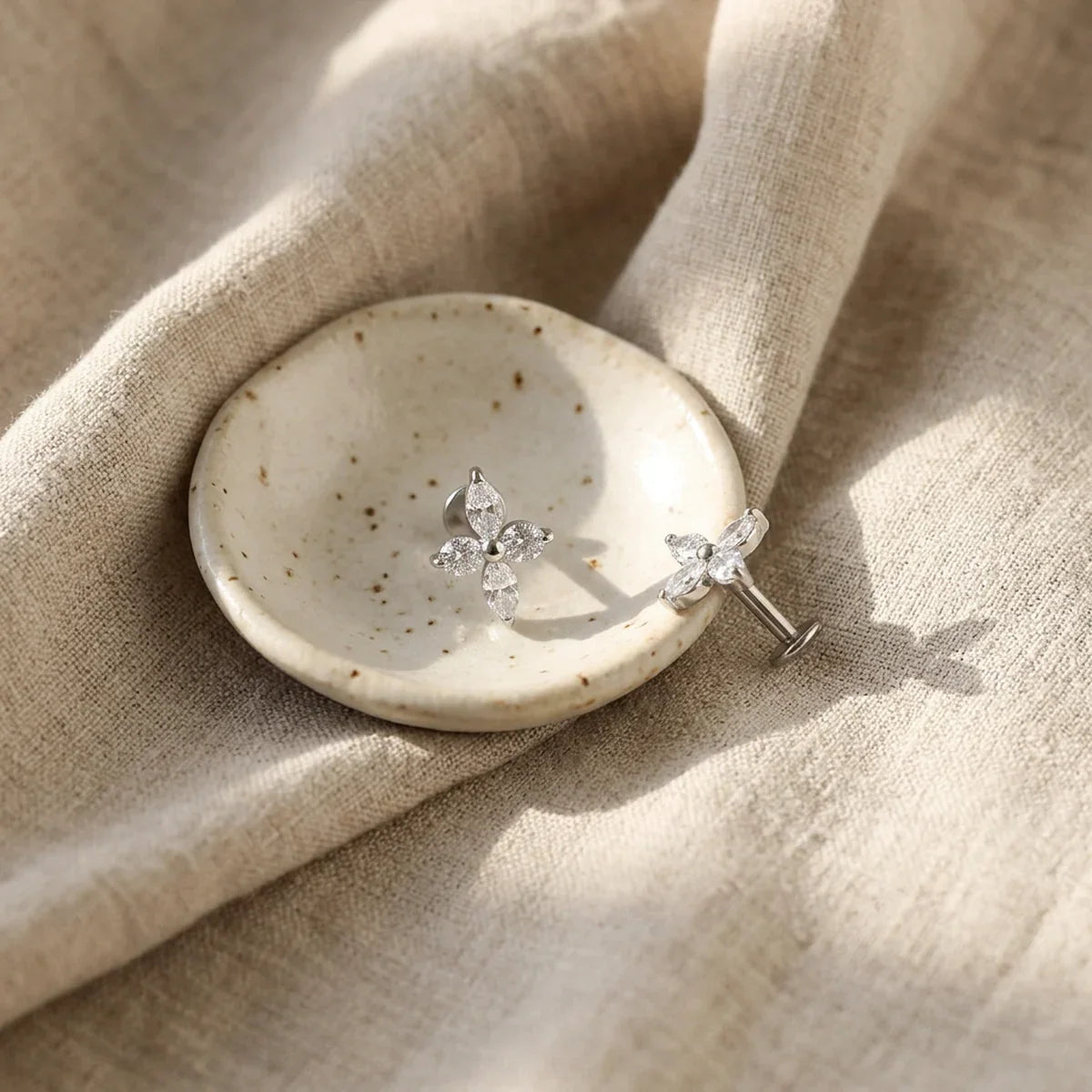
Flat back earrings, also called labret studs, turn the usual design around. The post itself has a flat disc on one end that rests against the back of the ear, and the decorative top attaches from the front. Nothing pokes into your neck or pillow, which makes them very comfortable. They are the standard choice for cartilage piercings such as the helix, conch or tragus, and more and more people wear them in their lobes too.
Internally threaded
Here the decorative top has a short threaded pin that screws into a hollow, threaded post. The thread is inside the post, so nothing rough passes through the piercing when you insert it. To close, hold the disc still behind the ear and turn the top clockwise until it is firm.
Threadless (push-pin)
In a threadless design, the top has a smooth pin that is slightly bent. You push it into the hollow post and the bend creates tension that holds it in place. To remove it, hold the disc and pull the top straight out. If a threadless earring feels loose, the bend can be increased very slightly, ideally by the person who sells or fits the jewellery. Threadless tops are easy to swap, so you can keep the same post and change the look in seconds.
Sizes to check
Flat back posts are described by thickness (gauge) and length. The most common thickness for cartilage is 16 gauge, around 1.2 mm, while 18 gauge, around 1.0 mm, is also widespread. Lengths of 6 or 8 mm are typical for healed lobes and many cartilage spots, but the right length depends on your anatomy. Standard lobe studs are usually thinner, often 20 gauge, around 0.8 mm. If you are unsure, check the post size of the earrings you already wear comfortably.
You can explore both systems in our flat back earrings.
Hoop closures: clickers, latches and endless wires
Hoops rarely use a separate back. The closure is built into the ring itself, and each type behaves differently.
- Hinged clicker: a short section of the ring opens on a tiny hinge and snaps shut with a click. It is secure, quick and the usual system on huggies and small hoops.
- Latch back: a curved wire on the back swings over and hooks into a small catch. It is common on medium and larger hoops and holds well when fully closed.
- Endless hoop: a thin wire slides into the hollow tube of the hoop. The look is seamless, but the wire can work loose, so these suit lighter, thinner hoops.
- Snap post: a straight post on one end clicks into a notch on the other. Make sure you hear the click before you let go.
Before you put a hoop in, open the closure fully and check that the end of the wire is smooth. Guide it through the piercing from the front, close it and give the hoop a gentle turn: if it rotates freely without catching, it is in properly.
For hoops you wear daily, a hinged clicker is the most practical. It opens with one hand, does not leave a loose piece to lose and stays shut while you get dressed.
Hooks, lever backs and other closures
Fish hook or French hook
The fish hook is an open curved wire that passes through the piercing and hangs behind the lobe. It is light, comfortable and quick to put on, which is why it is used for so many dangles. Because it is open, it can slip out if it catches on a scarf. A small silicone stopper on the end of the wire adds security at almost no cost.
Lever back
A lever back is a curved wire with a hinged lever that closes over its end. It combines the elegant look of a hook with the security of a closed system, so it is a good choice for drops you plan to wear for a whole day or an event.
Clip-on and magnetic
For unpierced ears, clip-ons hold with a spring and a padded plate, while screw clips let you set the pressure with a small screw. Magnetic earrings place a magnet behind the lobe to hold a light front. The pros and cons of clip-ons, ear cuffs and magnets are in our guide to wearing earrings without piercing. Comfort depends on the pressure, so start with short periods and choose lighter designs. You will find spring clips, ear cuffs and magnets in our clip-on earrings.
How to choose the right earring back
All the types of earring backs above can work well. The right one depends on how and when you wear your earrings.
- If you sleep in your earrings: choose flat backs or hinged huggies. Nothing sticks out to press into your head.
- If you lose earrings often: screw backs, flat backs or lever backs. Add silicone backs behind butterflies as a quick upgrade.
- If you change earrings every day: push backs and threadless tops are the fastest to switch.
- If your studs droop: use a disc back to support the weight.
- For cartilage piercings: flat backs are the standard choice for comfort and hygiene.
- For children: screw backs are hard to undo by accident.
Sensitive ears
The back and the post touch your skin for hours, so their metal matters as much as the front. Titanium and 316L stainless steel are common choices for sensitive ears, and titanium is often preferred when nickel is a known problem. 925 sterling silver suits many people too. "Hypoallergenic" is not a medical promise; it means the material is unlikely to cause a reaction for most people. Read our comparison of surgical steel and titanium if you want to understand the difference, and if you notice redness or itching, remove the earrings and ask a pharmacist or doctor.
Heavy earrings and drooping lobes
Weight is the enemy of every closure. A large front on a thin post pulls the lobe down and tilts the earring forward, and over the years heavy earrings can stretch a piercing. If you love bigger studs or drops, choose lighter designs, use disc backs or lever backs that spread the load and alternate with smaller pieces to give your ears a rest. Taking earrings out at night also helps.
Can you swap backs between earrings?
Often, but not always. A butterfly fits any smooth post of the right thickness. Screw backs only fit posts with the matching thread. Threaded and threadless flat back tops only fit posts of the same system and gauge. When in doubt, keep each back with its own earring.
Caring for backs and posts
Backs collect more residue than any other part of an earring, because they sit against the skin behind the ear. A little care keeps them comfortable and secure.
- Clean posts and backs every week or two with lukewarm water and a drop of mild soap, then dry them well.
- Check the grip of butterflies regularly and tighten the curls gently if they slide too easily.
- Replace silicone backs when they look stretched or cloudy.
- Store each pair with its backs in a small compartment or pouch, so the pieces do not get lost or scratched.
- Put earrings on after perfume and creams, and take them off for swimming.
Lost a back? A spare silicone back will do the job until you find a replacement in the same metal. If your ears are sensitive, avoid wearing a back of an unknown metal for long, and never force a back onto a post that is too thick for it: it will grip unevenly and may bend the post.
If you want to see how backs fit into the bigger picture of earring styles, our guide to types of earrings walks through every shape, from studs to ear cuffs.
Earrings with secure backs at Odelys
These pieces show the main closure systems in action.
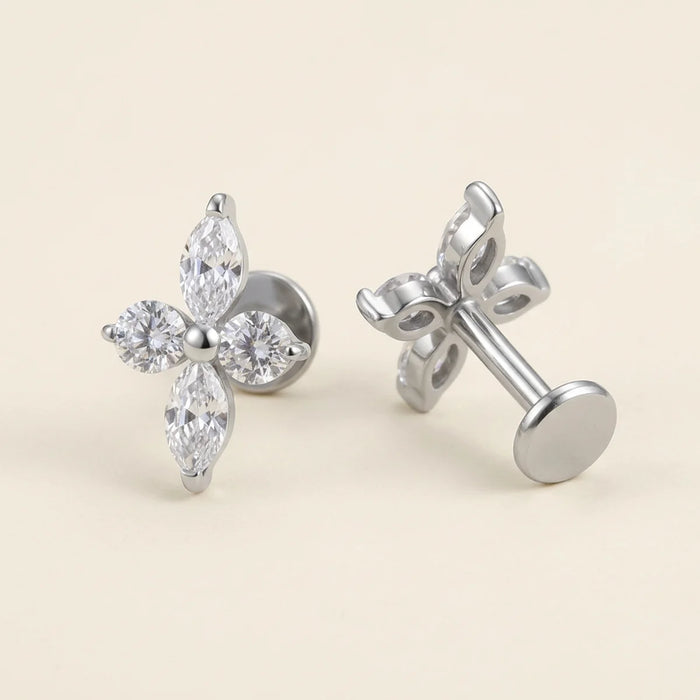
- Titanium flat back earrings: a flat disc behind the ear and a titanium post, comfortable for sleeping and suited to cartilage.
- Threadless earrings: a push-pin top that clicks into place by tension and is easy to swap.
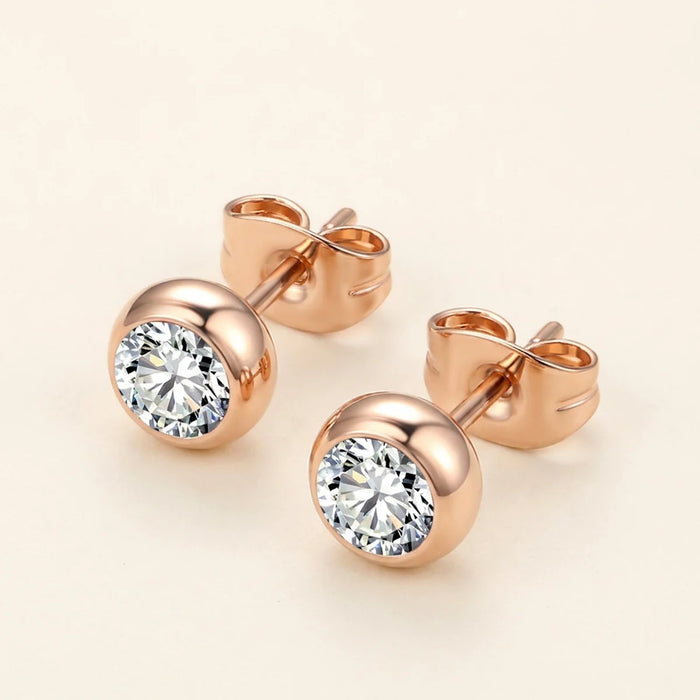
- Rose gold stud earrings: a soft rose tone on a classic stud with a butterfly back.
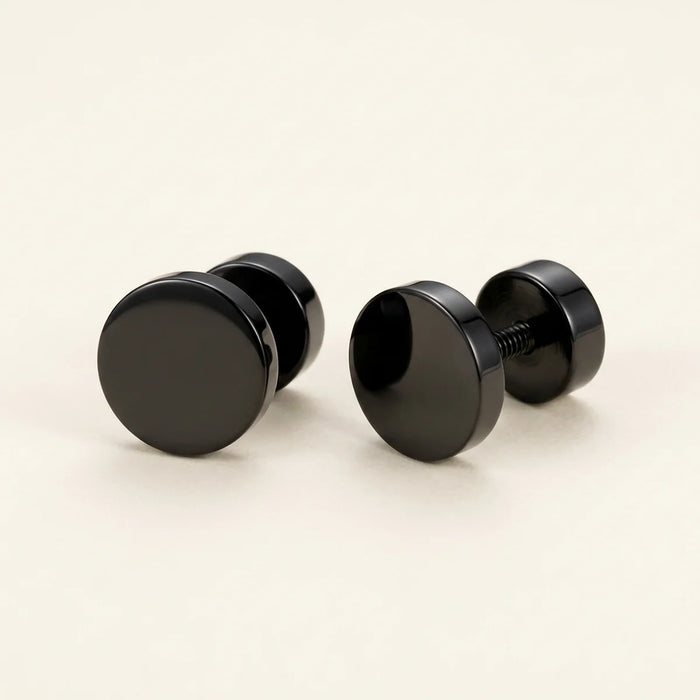
- Black stud earrings: a graphic, minimal stud that works with every outfit.
Whatever you choose, check the closure on every product page. Once you know how it works, you will put your earrings on in seconds and keep them where they belong.