Best earrings for nickel allergy: a guide to safe metals for sensitive ears

The best earrings for nickel allergy are made from implant-grade titanium, with niobium and well-made 316L stainless steel close behind. Titanium contains no added nickel, so most sensitive ears tolerate it well. Steel works for many people, but it does contain some nickel. Check the post first, and if reactions persist, ask a dermatologist for a patch test.
Best earrings for nickel allergy: materials compared
Not every "sensitive ear" metal is equal. The table below sums up how the most common earring materials behave when your skin reacts to nickel. Read it as a general guide, not a medical verdict: your own skin has the final word.
| Material | Nickel content | Suitability for nickel allergy | Things to know |
|---|---|---|---|
| Implant-grade titanium (ASTM F136) | No added nickel | Very high | Light, strong, used for medical implants |
| Commercially pure titanium (ASTM F67) | No added nickel | Very high | Slightly softer, same skin-friendly profile |
| Niobium | No added nickel | Very high | Often anodised in bright colours |
| 316L stainless steel | Around 10–14%, tightly bound | Good for many, not all | Low nickel release, but very sensitive skin may still react |
| Sterling silver 925 | Usually none; alloyed with copper | Good | Tarnishes; check that the post is solid silver |
| Gold-plated brass or base alloys | Base metal may contain nickel | Variable | Plating wears off and exposes the base |
| Unlabelled costume metal | Unknown | Low | The most common trigger of itchy earlobes |
If you only remember one thing, make it this: the part that matters most is the post, the bit that sits inside your piercing for hours. A titanium post on a decorative front is far kinder to your skin than a pretty front on a mystery-metal post.
Why nickel makes your ears itch
Nickel allergy is a type of allergic contact dermatitis. It is one of the most common contact allergies in Europe and North America, and earrings are a classic way people discover it. When a metal containing nickel touches skin, sweat slowly dissolves tiny amounts of nickel ions. In sensitised people, the immune system treats those ions as a threat and reacts.
The reaction is usually delayed. You put earrings on in the morning and feel fine, then a day or two later your lobes are itchy, red or swollen. Some people notice small bumps, flaking skin or a weeping, crusty patch around the hole. Because of that delay, many people blame the wrong pair.
Pierced ears are especially exposed. The post passes through skin that is thinner and more permeable than the outside of your ear, and it stays there for hours in a warm, slightly moist spot. That is why the EU sets a stricter nickel limit for posts that go into piercings than for other jewellery.
Two more points help explain what you feel:
- Sensitisation lasts. Once your body has learned to react to nickel, the reaction usually returns every time you are exposed.
- Dose matters. A metal that releases very little nickel may cause no problem for one person and a mild rash for another. That is why "low nickel" is not the same as "no nickel".
Can you become allergic later in life?
Yes. Many people wear cheap earrings for years without a problem and then start reacting. Sensitisation can build up after repeated or prolonged contact, and a new piercing, a long day in a sweaty pair or a scratched post can be the tipping point. The reverse is rare: once you are allergic, you usually stay allergic. That is why it pays to choose skin-friendly metals early, even if your ears seem fine today.
It also helps to think beyond earrings. Belt buckles, jeans buttons, watch backs and phone cases can contain nickel too. If your lobes react and you also notice itchy patches in those places, mention it to your doctor, because it points strongly towards nickel.
None of this replaces a diagnosis. If you think you are allergic, a dermatologist can confirm it with a patch test, which takes the guesswork out of choosing jewellery.
Titanium: the first choice for sensitive ears
Titanium is the material most piercers and dermatologists mention first for people with a confirmed nickel allergy. The reason is simple: it contains no added nickel, and it forms a stable oxide layer on its surface that keeps it from reacting with sweat. Browse our titanium earrings for studs, conch hoops and flat backs in ASTM F136 titanium.
Two standards are worth knowing:
- ASTM F136 covers Ti-6Al-4V ELI, a titanium alloy with aluminium and vanadium that is used for surgical implants. "ELI" means extra low interstitials, a purer version of the alloy.
- ASTM F67 covers commercially pure titanium, also used in medicine.
When a shop writes "implant-grade titanium", these are the standards it should be referring to. Generic "titanium" with no grade could be anything, including a titanium-coloured coating on another metal, so look for the specification.
Titanium has other perks for everyday wear. It is about 40% lighter than steel, which matters with larger studs or titanium flat back earrings you might sleep in. It does not tarnish, it handles water well, and it keeps its natural grey tone for years. It can also be anodised into colours without any dye or plating, using only an electric current that thickens the oxide layer.
How can you tell real titanium from a lookalike? Feel the weight: a titanium stud is noticeably light in the hand. Then read the product page. A clear grade, such as ASTM F136, is a good sign; vague wording like "titanium-style" or "titanium colour" is not. If in doubt, ask the shop directly what the post is made of.
Are there downsides? A few. Titanium is harder to work than softer metals, so very intricate designs are less common. Its natural colour is a darker silver than polished steel. And no metal can be guaranteed reaction-free for every single person, because rare titanium sensitivities exist. Still, if you have reacted to almost everything else, titanium is the sensible place to start.
Surgical steel and other options for nickel allergy
"Surgical steel" usually means 316L stainless steel, sometimes 316LVM. It is a solid, affordable material for everyday earrings, and many people with mild sensitivity wear it without trouble. But it is important to be honest about one fact: 316L does contain nickel, typically around 10 to 14 percent.
So why does it work for so many people? In good stainless steel, chromium forms a passive film on the surface and the nickel is tightly locked into the alloy. The amount that actually escapes onto your skin, the nickel release, is low. Quality steel jewellery sold in the EU must stay under the REACH release limits, and many people never notice a thing.
The catch is that "low" is not "zero". If your allergy is strong, even a small release can be enough. Cheap or poorly finished steel, scratched surfaces and long wear in sweaty conditions can all increase the risk. Our guide on surgical steel vs titanium earrings goes deeper into this choice.
Niobium
Niobium is a close cousin of titanium in terms of skin tolerance. It contains no added nickel, is often anodised in vivid shades and is a good alternative if you can find it in a style you like.
Sterling silver 925
Sterling silver is 92.5% silver, usually alloyed with copper rather than nickel. Most people with nickel allergy wear it comfortably. Two caveats: silver tarnishes, and some cheaper pieces use a different metal for the post or are plated over a base alloy. Ask what the post is made of.
Gold-plated pieces
Gold-plated or gold-tone earrings look lovely, but the plating is only a thin layer. What matters for allergies is the metal underneath. Plating over titanium or steel is a much safer bet than plating over brass or an unlabelled alloy, because when the layer wears thin, your skin meets the base metal.
What "hypoallergenic" and "nickel free" really mean
Labels can be reassuring and misleading at the same time. Here is how to read them.
Hypoallergenic is not a regulated term for jewellery. It means "less likely to cause an allergy", not "cannot cause one". A responsible shop explains which material is behind the claim. At Odelys, when we describe a piece as hypoallergenic, we name the metal so you can decide for yourself.
Nickel free sounds absolute but, in practice, almost every metal has trace amounts of something. In the EU the term is often used loosely for items with very low nickel release. Treat it as a starting point and check the material.
Nickel safe or REACH compliant refers to the EU limits on how much nickel an item may release onto the skin, measured with the EN 1811 test method:
- posts and parts inserted into pierced ears: no more than 0.2 µg/cm² per week;
- other parts in direct and prolonged contact with skin, such as the front of an earring: no more than 0.5 µg/cm² per week.
These limits protect most people from developing a nickel allergy in the first place. They do not guarantee that someone who is already highly sensitised will never react. That is why, if your skin is very reactive, titanium remains the safer recommendation than "compliant" steel.
A quick checklist when you shop:
- Is the material named, ideally with a grade (ASTM F136, 316L, 925)?
- Is the post made of the same metal as the front?
- If the piece is plated, what is the base metal?
- Are the backs made of a skin-friendly metal too?
Our hypoallergenic earrings collection lists the material for every piece, so you can filter by what your ears actually tolerate.
How to wear earrings with a metal allergy
Choosing the right metal is most of the job, but how you wear your earrings also counts. A few habits can make the difference between comfortable ears and a flare-up.
Mind the backs
The back sits against the skin behind your lobe for hours. A titanium post with a cheap metal butterfly back can still cause trouble. Look for backs in the same material, or silicone backs that keep metal away from the skin. Our guide to types of earring backs compares the options.
Keep things clean and dry
- Clean posts regularly with mild soap and water, then dry them well.
- Avoid wearing earrings in the shower, at the gym or overnight if your skin is reactive, since sweat and moisture increase nickel release from any alloy.
- Do not share earrings, and do not wear a scratched or worn pair against irritated skin.
Give irritated ears a break
If your lobes become red or itchy, take the earrings out and let the skin calm down. Do not put a new pair in skin that is already inflamed. When the area is calm, try a titanium stud for short periods and see how it goes.
Start small and simple
Smaller, lighter studs put less pressure on the piercing and expose less metal to the skin. A simple titanium stud is a smart first test after a reaction. Once you know it works, you can explore hoops and larger shapes in the same material.
New piercings are a different case
Fresh piercings are open wounds. Initial jewellery should be implant-grade, and professional piercers usually choose titanium. Fashion earrings, however well made, are for healed piercings.
Our picks for sensitive ears at Odelys
These pieces are a good starting point if you are looking for the best earrings for nickel allergy in our range. Each one lists its material on the product page, so you know exactly what touches your skin.
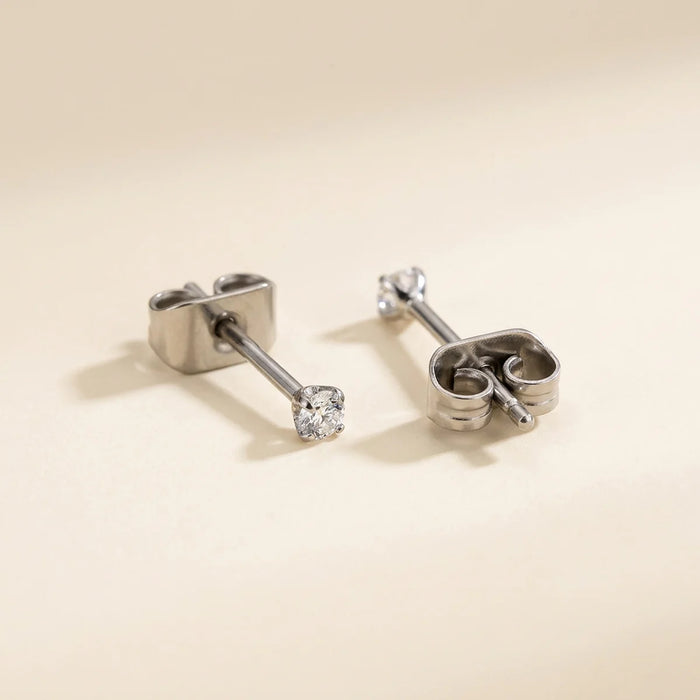
- Titanium stud earrings: a simple everyday stud and the safest first test if your ears react to most metals.
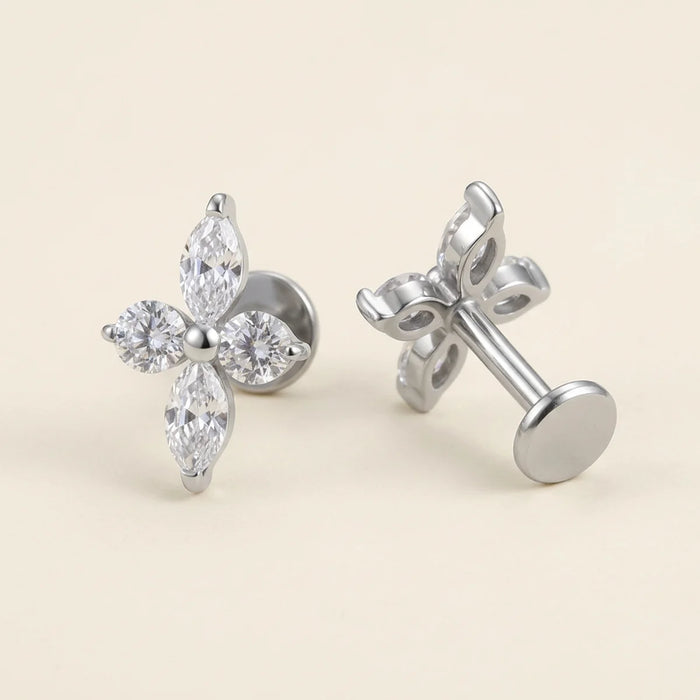
- Flat back studs in titanium: a flat disc behind the ear means nothing pokes you, which is comfortable for sleeping and for cartilage.
- Stainless steel stud earrings: a polished 316L option for mild sensitivity, if steel has worked for you before.
- Stainless steel hoops: tarnish-resistant everyday hoops for ears that tolerate quality steel.
If you are unsure between titanium and steel, choose titanium. It is the lower-risk option, and you can always try steel later once you know how your ears respond.
When to see a dermatologist
A good material choice prevents many reactions, but it does not treat an allergy. Book an appointment with a dermatologist or your doctor if:
- you are not sure whether nickel is the cause of your reaction;
- the rash spreads beyond the earlobe, or appears in other places such as under a watch or belt buckle;
- the skin is weeping, very swollen, painful or shows signs of infection;
- the irritation does not settle within a few days of removing your earrings;
- you react even to titanium.
A dermatologist can run a patch test, which places small amounts of common allergens, nickel among them, on your back for a couple of days. The result tells you which metals to avoid, and sometimes reveals that the culprit is something else entirely, such as cobalt, chromium or a product you use on your skin.
Meanwhile, keep it simple: remove the earrings, keep the area clean and avoid scratching. Do not try to treat a strong reaction on your own with creams you have at home.
Living with a nickel allergy does not mean giving up earrings. It means knowing which metals suit you, reading labels with a critical eye and choosing pieces that tell you clearly what they are made of. Start with titanium, keep the posts and backs in mind, and build your collection from there.