What does 925 mean on jewelry? A simple guide to sterling silver
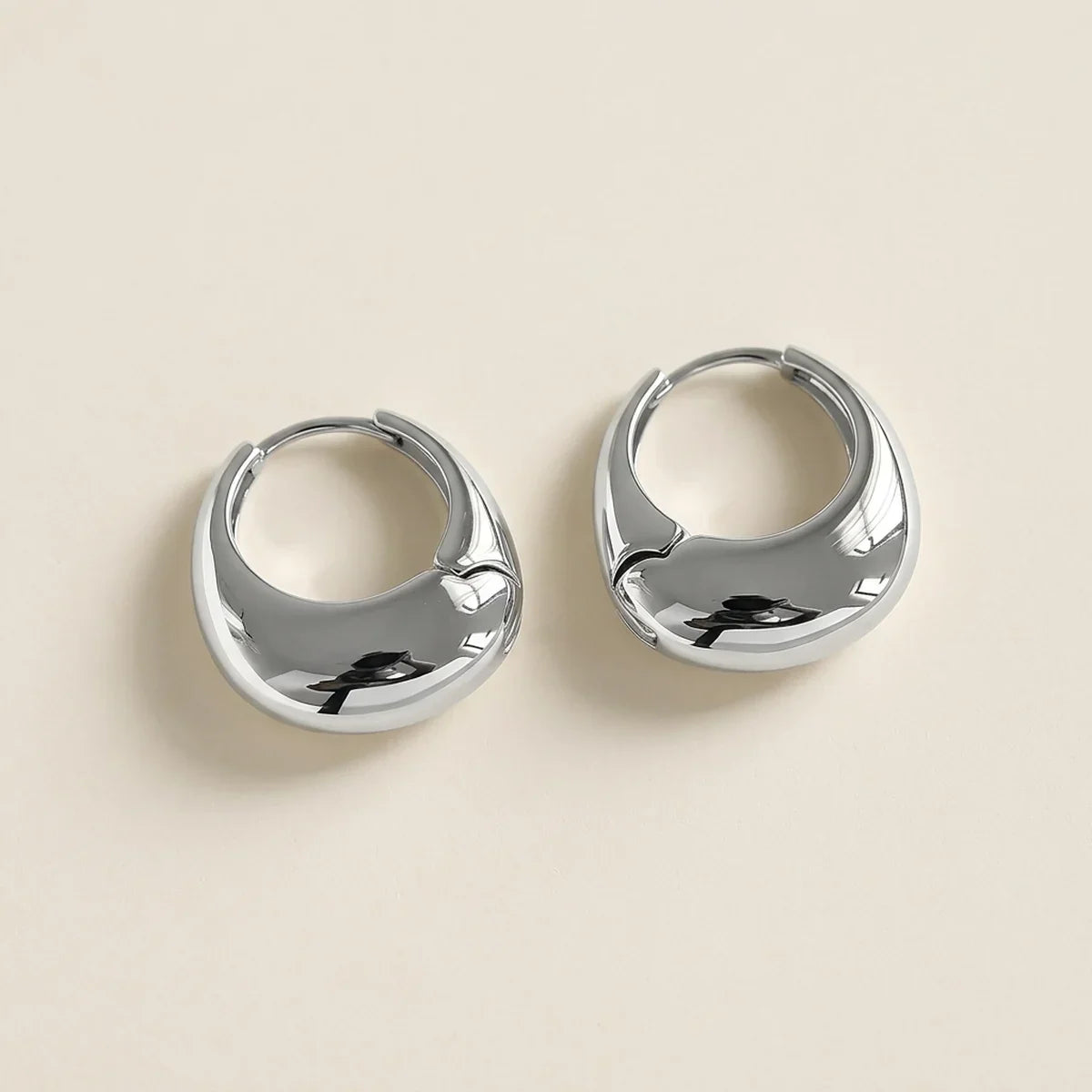
What does 925 mean on jewelry? It means the piece is sterling silver: 92.5% pure silver mixed with 7.5% other metals, usually copper, to make it strong enough to wear. The tiny "925" stamp is a purity mark, the same idea as "14k" on gold. It tells you what the metal is, not who made it.
What 925 means on jewelry at a glance
Jewellery stamps are short on purpose: they have to fit on a post, a clasp or the inside of a hoop. Once you know the main codes, you can read almost any piece in a few seconds. This table covers the marks you are most likely to find on silver earrings, and a few that look similar but mean something different.
| Stamp | What it means | Silver content |
|---|---|---|
| 925 | Sterling silver | 92.5% |
| S925, Ster, Sterling, STG | Other ways to write sterling silver | 92.5% |
| 958 | Britannia silver, a softer, higher grade | 95.8% |
| 999, FS | Fine silver, almost pure | 99.9% |
| 800 or 835 | Lower grades, often on older European pieces | 80% or 83.5% |
| EP, EPNS, "silver plated" | A thin silver layer over another metal | Surface only |
| Tibetan silver, nickel silver, German silver | Alloys with little or no silver | Usually none |
The quick rule: a three-digit number tells you how many parts per thousand are silver. The higher the number, the purer the metal, and the softer it becomes.
What is sterling silver?
Sterling silver is the standard silver used for jewellery around the world. It is an alloy, which simply means a mix of metals melted together. In every 1,000 parts, 925 are silver and 75 are something else. That "something else" is usually copper, sometimes with a little zinc or germanium added to slow tarnish.
The name "sterling" is centuries old and comes from English coinage, but today it is a purity standard, not a brand. When you see 925 sterling silver on a product page, it describes the whole piece, or at least the parts that touch your skin, not just a coating on top.
Sterling silver has a bright, cool white colour with a soft glow rather than a mirror shine. It feels slightly heavier than steel or brass of the same size, it warms up quickly against your skin and it can be polished again and again. That is why it is the classic metal for sterling silver earrings you plan to keep for years.
Sterling silver vs fine silver
Fine silver, stamped 999, is almost pure. It has a beautiful white colour, but it is so soft that a thin hoop would bend in your hands and a post could snap after a few weeks. Sterling silver gives up a tiny amount of purity to gain strength. For earrings, that trade is almost always worth it: clasps stay firm, posts stay straight and hoops keep their shape.
Why 925 silver is mixed with other metals
Pure silver is one of the softest metals used in jewellery. Copper makes the alloy harder and more durable without changing the colour much. That is the main reason the 92.5% standard exists.
The mix also has a few side effects you should know about:
- Strength: sterling silver holds fine details, thin wires and hinged closures far better than fine silver.
- Tarnish: copper reacts with the air, so sterling silver darkens a little faster than pure silver. This is normal and easy to clean.
- Colour: good sterling silver stays white. A slightly warmer tone can appear on very old pieces as the surface changes.
- Price: the silver itself is only part of the cost. Design, finish and plating matter as much as the metal.
Some makers use special alloys, sometimes sold as "anti-tarnish" silver, that replace part of the copper with germanium. They still meet the 925 standard, they simply darken more slowly.
Where to find the 925 stamp on earrings
Stamps are tiny, so you will often need good light or your phone's camera zoom. On earrings, look in these places first:
- Studs: on the back of the post or on the flat part behind the stone.
- Hoops and huggies: on the inside of the hoop, close to the hinge or the clasp.
- Drops and dangles: on the hook, the jump ring or a small tag near the clasp.
- Ear cuffs: on the inside of the band.
Very small pieces are sometimes not stamped at all, simply because there is no space. In that case the product description or the certificate that comes with the jewellery is the place to check.
Other marks you may see next to 925
In Italy, precious metal jewellery is marked with the purity number and an identification mark: a small star, a number and the letters of the province where the maker is registered. In the UK, pieces above a certain weight carry a full hallmark from an assay office, with a lion symbol for sterling silver. In other countries you may just see "925" on its own. A missing country mark does not mean the silver is fake, it often just reflects local rules and the weight of the piece.
How to tell if sterling silver is real
A stamp is the first clue, but stamps can be copied. If you want to check an older piece or something bought second hand, these simple tests give you a good idea at home. None of them is perfect on its own, so use two or three together.
- Look for the stamp. Check for 925, S925 or Ster in the places listed above. Be careful with "925" next to words like "plated" or "EP": that is silver plating, not solid silver.
- Try a magnet. Silver is not magnetic. If a strong magnet grabs the earring firmly, the body is probably steel or another metal with only a silver colour. Clasps and springs can contain steel, so test the main part.
- Rub it with a white cloth. Real silver that has been worn for a while often leaves a faint grey or black mark on a soft white cloth. This is the tarnish coming off.
- Feel the temperature. Silver conducts heat very well. Hold the piece in your palm: it should warm up quickly and lose the cold feeling faster than most other metals.
- Watch for green. If the earring leaves a green or black mark on your skin after a short time and has no 925 stamp, the base is likely copper or brass with a thin coating.
For anything valuable, the only reliable answer comes from a jeweller, who can test the metal with acid or an analyser without damaging the piece. Avoid scratching or filing earrings at home: you will only spoil the surface and you still will not get a clear result.
Sterling silver, silver-plated or silver-tone?
These three phrases sound alike but describe very different earrings. Sterling silver is solid 925 silver all the way through. Silver-plated means a thin layer of real silver over a cheaper base such as brass or copper; once the layer wears away, the base shows through. Silver-tone or "silver colour" only describes the look: the metal can be steel, alloy or anything else with a white finish. None of these is wrong in itself, and a well-made steel earring can be a great buy. The important thing is that the label is honest, so you know what to expect from the colour, the weight and the way the piece ages over time.
Does 925 silver tarnish?
Yes. All sterling silver tarnishes in time, and that is actually a sign of real silver. Tarnish is a thin dark layer that forms when silver meets sulphur compounds in the air, in some foods, in rubber and in certain cosmetics. It starts as a soft yellow tone, then turns grey and finally black if the piece sits forgotten in a drawer.
Tarnish does not damage the metal underneath and it is fully reversible. You can slow it down with a few habits:
- Put your earrings on after perfume, hairspray and body lotion, not before.
- Take them off for swimming pools, the sea, saunas and cleaning with household products.
- Store each pair in a small closed bag or box, away from humidity and away from rubber bands.
- Wear them often. Gentle contact with skin and clothes keeps silver bright.
When they do darken, a soft polishing cloth is usually enough. For a step-by-step method from light haze to heavy black, read our guide on how to clean silver earrings without damaging stones or plating.
How fast does sterling silver tarnish?
There is no fixed timetable, because tarnish depends on where you live and how you wear your earrings. In a dry city flat, a pair you wear every day may stay bright for months. Near the sea, in a humid bathroom or in a drawer next to rubber bands, a light yellow haze can appear within a few weeks. Earrings you wear often usually tarnish less than the ones you keep for special occasions, because daily contact gently polishes the surface. If a pair has turned completely black, it has simply been resting for a long time: a proper clean brings it back.
Rhodium-plated and gold-plated 925 silver
Many modern silver earrings are not left bare. They are coated with a very thin layer of another metal, either for colour or for protection.
- Rhodium-plated sterling silver: rhodium is a bright white metal from the platinum family. A thin rhodium layer makes silver look whiter and more mirror-like, and it slows tarnish. When it wears away after long use, the silver underneath is still there.
- Gold-plated sterling silver: a gold-tone layer applied on a 925 silver base. You get the warm colour of gold with a silver core, which is a good choice if you prefer a precious base metal under the plating.
Plating is always thin, so it will fade faster on parts that rub, such as hooks and the inside of hoops. If you want to know how long a gold-tone finish lasts and how to make it last longer, our guide on whether gold-plated jewelry tarnishes explains it in detail. You can also browse our gold earrings, where every product page says clearly which base metal sits under the plating.
Is 925 sterling silver good for sensitive ears?
For most people, yes. Sterling silver is one of the metals often recommended for sensitive ears, together with implant-grade titanium and 316L surgical steel. The usual cause of earring reactions is nickel, and quality sterling silver is made with copper, not nickel.
Keep three things in mind:
- Check the whole earring. A silver front with a cheap back or hook can still irritate. Look for posts and hooks in 925 silver, titanium or surgical steel.
- Plating changes the surface. Rhodium and gold-tone layers are fine for many people, but if you know you react easily, bare or rhodium-plated silver is the simplest option.
- Fresh piercings are different. For a new piercing, piercers usually choose titanium. Wait until the hole has healed before switching to sterling silver.
If you already know you have a nickel allergy, start with our guide to the best earrings for nickel allergy, then browse our hypoallergenic earrings, where each pair lists its exact metal. For a direct comparison between the two other common choices, see surgical steel vs titanium earrings.
Is 925 silver worth buying?
Sterling silver sits in a sweet spot. It is a real precious metal with a long life, yet it costs far less than gold. A pair of 925 silver earrings can be polished, repaired and worn for many years, which makes it a good choice for everyday studs and huggies you rarely take off.
Here is how it compares with the other metals you will often see in earrings:
| Metal | Strengths | Watch out for |
|---|---|---|
| 925 sterling silver | Precious metal, bright colour, can be polished for years | Tarnishes and needs occasional cleaning |
| Surgical steel 316L | Tough, low maintenance, good value | Colour is greyer than silver |
| Titanium | Very light, ideal for new piercings | Fewer decorative styles |
| Gold-plated brass or alloy | Fashion styles at a lower price | Plating wears faster, base may contain nickel |
If you want a mix, gold-plated 925 silver gives you a gold-tone look with a silver base, while rhodium-plated silver gives you a brighter white that stays clean longer.
Sterling silver earrings to start with
If you are building a small silver collection, start with pieces you can wear every day and add one or two statement pairs later. These are made with a 925 sterling silver base:
- Chunky silver earrings: small, bold hoops with a high polish that make simple outfits look finished.
- Silver pearl earrings: freshwater pearl studs on sterling silver, quiet enough for the office.
- Star stud earrings: tiny stars in 925 silver, perfect for a second or third hole.
- Snake earrings: a sculpted hoop with a little more character.
- Opal earrings: a soft flash of colour set in sterling silver.
- Silver dangle earrings: light drops that move when you do, for evenings out.
Every product page lists the base metal, any plating and the type of back, so you always know exactly what you are wearing. Once you can read the 925 stamp, choosing silver earrings becomes much simpler: check the mark, check the back, and pick the shape you love.