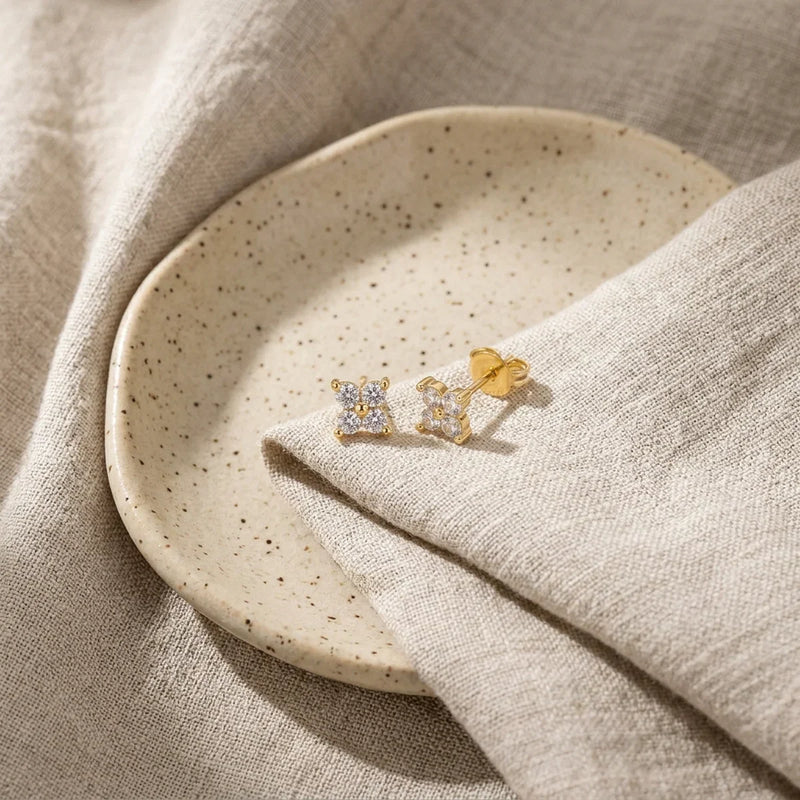
Earring symbols meaning: what the cross, heart, star and evil eye stand for

Earring symbols carry meaning that goes far beyond decoration. A tiny cross, heart or evil eye can be a sign of faith, love, protection or simply a reminder of something personal, and knowing what each symbol traditionally stands for helps you choose earrings that say exactly what you want, for yourself or as a gift. This guide explains the meaning of the most popular earring symbols, from the cross and the heart to the star, the evil eye, the snake and the four-leaf clover, with tips on how to wear them today.
Earring symbols meaning at a glance
Symbols have been worn on the ears for thousands of years, from Egyptian scarabs to Victorian love tokens. Many meanings overlap and vary between cultures, so treat this table as a starting point rather than a strict rule.
| Symbol | Traditional meaning | Typical style today |
|---|---|---|
| Cross | Faith, protection, sacrifice; also rebellion in rock and street style | Small dangles, single earrings for men |
| Heart | Love, friendship, affection | Studs, hoops with a heart charm |
| Star and moon | Guidance, dreams, femininity, cycles | Tiny studs, celestial ear stacks |
| Evil eye and hamsa | Protection against envy and bad luck | Charm hoops and drops |
| Four-leaf clover | Luck, hope | Dainty charms and studs |
| Snake | Rebirth, eternity, wisdom, love | Climbers and sculptural studs |
| Knot | Union, commitment, strength | Chunky studs |
| Bee, flower, bow | Community, growth, celebration | Playful studs and drops |
Cross earrings: meaning and how to wear them
The cross is the best-known symbol in the Christian world, a sign of faith, sacrifice and protection. For centuries it was worn mainly as a pendant, but small cross earrings became popular for baptisms, First Communions and religious holidays, often as a gift from godparents or grandparents.
In the twentieth century the cross also moved into fashion and music. Rock, punk and later hip-hop artists wore single cross earrings as a sign of style or rebellion rather than religion, and the dangling cross in one ear became a classic of men's jewellery. Today both meanings coexist: some people wear a cross as a quiet statement of faith, others as a design they simply like.
A few points help you wear it with respect and style:
- Size and finish: a small plain cross reads as personal and discreet; a large or studded cross is a fashion statement.
- One ear or two: a single cross dangle is very common for men, a matching pair for women. There is no rule about which ear; our guide on which ear guys wear earrings explains where the old myths come from.
- Variations: the inverted cross is traditionally linked to Saint Peter, but in pop culture it is often read as provocative. If you want a neutral look, choose the classic upright shape.
The shape of the cross changes its feel too. The Latin cross, with a longer lower arm, is the most familiar. The Greek cross has four equal arms and looks more geometric and modern. The Celtic cross adds a ring around the centre, linked to Irish and Scottish heritage, while the Maltese cross, with its four arrow-shaped arms, recalls the Knights of Malta and is often chosen for its bold outline. In jewellery design, a cross set with small stones sparkles like a classic piece of fine jewellery, while a matte black or brushed steel cross feels urban and masculine.
Heart earrings: love in its simplest form
The heart is probably the most universal jewellery symbol. It stands for love in every form: romantic love, friendship, family and self-love. That is why heart earrings are such a safe gift: the message is clear and kind, whoever receives them.
The heart shape as we know it became widespread in Europe in the late Middle Ages and turned into the language of love tokens in the following centuries. Victorian jewellery used hearts in lockets, brooches and earrings, often combined with keys, locks or crowns to tell a whole story.
Today, styles change the message slightly:
- Tiny heart studs feel sweet and everyday, perfect for a first pair or a friendship gift.
- Heart-shaped hoops are playful and modern, great in an ear stack.
- Heart charms on chains add movement and a romantic, feminine touch for evenings or Valentine's Day.
- An open, outlined heart is often read as an open heart: generosity and openness to love.
Colour adds a further layer. Gold-tone hearts feel warm and classic, silver hearts fresh and modern, and red or pink stones turn the earring into an obvious love token. Mismatched pairs, a heart in one ear and a small stud or star in the other, are a subtle way to wear the symbol without looking too sweet.
Star and moon earrings: guidance and dreams
Stars have guided travellers and sailors for millennia, so a star earring often means guidance, hope and following your dreams. In many cultures the star is also a sign of protection and of something precious and rare, which is why we call people we admire "stars".
The moon is linked to femininity, intuition and cycles, because its phases mirror the rhythm of time. A crescent moon can symbolise growth and new beginnings, while a full moon stands for completion. Together, sun, moon and stars form the "celestial" style that has been a huge trend in recent years: mismatched tiny studs, little stars climbing the lobe and crescent huggies.
Celestial earrings are one of the easiest symbols to wear every day. They are small, they mix with any metal and they suit both lobes and upper-ear piercings. A mix of a star stud, a tiny moon and a plain hoop is a simple way to build a personal ear stack; our guide on how to wear hoop earrings has more ideas.
The number of points can matter, too. The five-pointed star is the most common shape in jewellery and often represents the human figure or the elements; a shooting star suggests a wish about to come true; an eight-pointed star is linked in several traditions to renewal and balance. Small details like these make a star earring feel personal rather than generic, especially as a gift for someone starting something new.
Evil eye and hamsa: protection charms
The evil eye, a blue eye-shaped charm called "nazar" in Turkey and "mati" in Greece, is one of the oldest protective symbols around the Mediterranean and the Middle East. The belief is that an envious gaze can bring bad luck, and the blue eye "looks back" to deflect it. People hang it in homes, cars and, of course, wear it as jewellery.
The hamsa, the open hand also known as the Hand of Fatima or Hand of Miriam, is another protective symbol shared by several cultures and faiths. Often the two are combined: a hand with an eye in the centre, believed to double the protection. Worn as earrings, they are a lovely gift for someone starting a new job, moving house or welcoming a baby.
Style-wise, evil eye earrings tend to be colourful, with blue enamel or glass, so they work best as the one bright touch in an outfit. They are especially popular in summer, with white linen, tanned skin and gold-tone metal.
The colour of the eye is said to carry its own nuance. Dark blue, the most common, stands for calm and protection; light blue for peace and clarity; green for happiness and success; red for courage. Many people also believe that an evil eye charm that cracks has done its job by absorbing negative energy and should be replaced. Whether or not you share the belief, it is a meaningful, colourful symbol with a long history.
Four-leaf clover: a pocket of luck
A four-leaf clover is rare in nature, roughly one in many thousands, which is why finding one has long been seen as a sign of good fortune. In Irish and wider European folklore, each leaf is said to stand for something: faith, hope, love and luck.
Clover earrings are an easy symbol to give and to wear. They are cheerful without being childish, they look elegant in gold tones with small crystals, and they carry a positive message for exams, new jobs, birthdays and graduations. Many people simply like their shape, which works as a pretty floral motif even if you do not believe in luck.
A small clover charm on a huggie or a simple stud is the most versatile option; a clover set with sparkling stones turns the same symbol into an evening piece.
Do not confuse it with the shamrock, the three-leaf clover that is a national symbol of Ireland, traditionally linked to Saint Patrick, who is said to have used it to explain the Holy Trinity. The shamrock is about identity and faith; the four-leaf clover is about luck. In jewellery the two look similar, so count the leaves before you choose.
Snake and knot earrings: rebirth, eternity and union
The snake is one of the most ancient and complex symbols. Because it sheds its skin, it represents rebirth and transformation; the ouroboros, a snake biting its own tail, stands for eternity. In ancient Greece the snake was associated with healing, and in the nineteenth century snake jewellery became a symbol of eternal love, made famous by the snake-shaped engagement ring Queen Victoria received from Prince Albert.
Today snake earrings feel bold and a little edgy. Climbers that wind along the lobe, small coiled studs and sculptural hoops are the most popular shapes, and they pair well with black clothing and minimal outfits.
The knot has a gentler meaning. It symbolises union and commitment, the bond between two people, which is why "tying the knot" means getting married. Love knots have appeared in jewellery for centuries as a sign of friendship and loyalty. A chunky knot stud is a modern, graphic way to carry that meaning, and it makes a thoughtful gift for a partner, a sister or a best friend.
The direction of the snake is a detail some people care about: a snake moving upwards along the ear is often read as growth and ambition, one coiled in a circle as protection and continuity. Snake earrings set with green or red stones recall the famous Victorian designs, while plain polished metal looks contemporary.
Bee, flower and bow: playful symbols
Some symbols are less solemn but just as meaningful. The bee stands for hard work, community and sweetness, and it was the emblem of Napoleon, a sign of immortality and resurrection. Bee earrings are cheerful and witty, ideal for someone who is always busy.
Flowers have their own language, made popular in the nineteenth century: roses for love, daisies for innocence, sunflowers for loyalty. In general, a flower earring means growth, beauty and new beginnings, which makes it a perfect spring or birthday gift.
The bow is the symbol of a gift itself. It suggests celebration, femininity and connection, two loops tied together. Small bow studs have become a favourite in recent seasons, and they are a natural choice for Christmas, anniversaries and special occasions.
The butterfly deserves a mention too: because it starts life as a caterpillar, it symbolises transformation, freedom and a fresh start. Butterfly earrings are a gentle way to mark a change, such as a new city, a recovery or a new chapter, and they suit both young and mature styles depending on size and finish.
How to choose a symbol, for you or as a gift
When you choose symbolic earrings, think about three questions: what message do you want to send, how will they be worn, and does the meaning feel right for that person? A few tips:
- Personal meaning first: a clover for an exam, a heart for a friend, a star for someone chasing a dream. A short note explaining the symbol makes the gift unforgettable.
- Respect religious symbols: give a cross or a hamsa only if you know the person will appreciate it, especially for important occasions.
- Size for everyday wear: small studs and huggies can be worn every day; larger dangles are better for occasions.
- Check the metal: for sensitive ears, look for sterling silver, stainless steel or titanium posts. See the best earrings for a nickel allergy.
- Mix carefully: two or three symbols in one ear stack can look curated; more can feel busy.
Finally, remember that meaning is personal. A star might remind someone of a grandmother, a snake of a favourite trip, a bee of a garden at home. The traditional meanings above are a guide, but the best symbolic earring is the one that tells your own story. That is why symbolic earrings are often kept for years, long after other trends have passed.
Our symbol earrings
Every style below states its metal clearly, so you know what you are wearing:
- Men's cross dangle earrings: a stainless steel cross dangle in steel or black.
- Gold heart earrings: a heart charm on a long chain, with S925 silver posts.
- Heart hoop earrings: stainless steel hoops shaped like a heart.
- Star stud earrings: 925 sterling silver stars with cubic zirconia.
- Evil eye earrings: a hamsa charm with a blue evil eye and cubic zirconia.
- Clover earrings: small hoops with a cubic zirconia four-leaf clover.
- Snake earrings: 925 sterling silver with cubic zirconia.
- Knot earrings: chunky stainless steel knot studs.
- Bee earrings and gold bow earrings for a playful touch.
Looking for a present? Browse our earrings for her collection, or see all men's earrings for more cross and steel styles.
Pieces in this guide
-
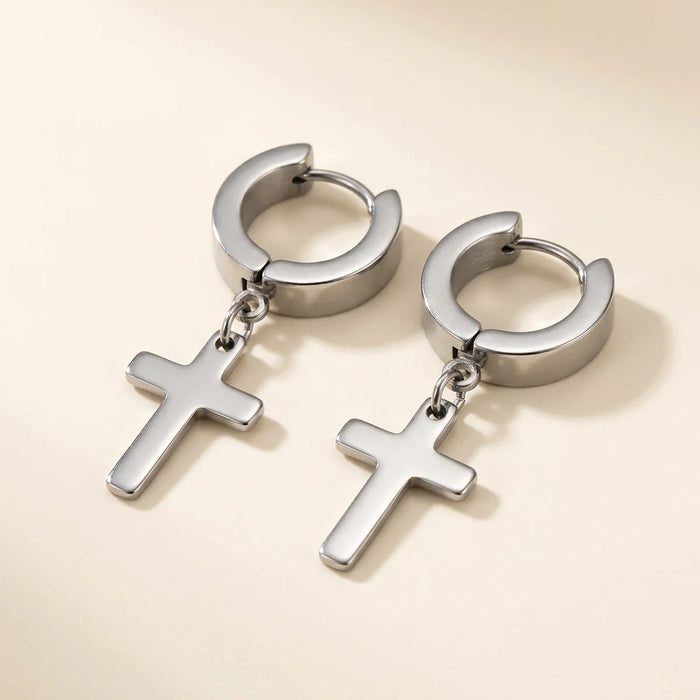 Mens dangle earrings with cross39,90 €
-
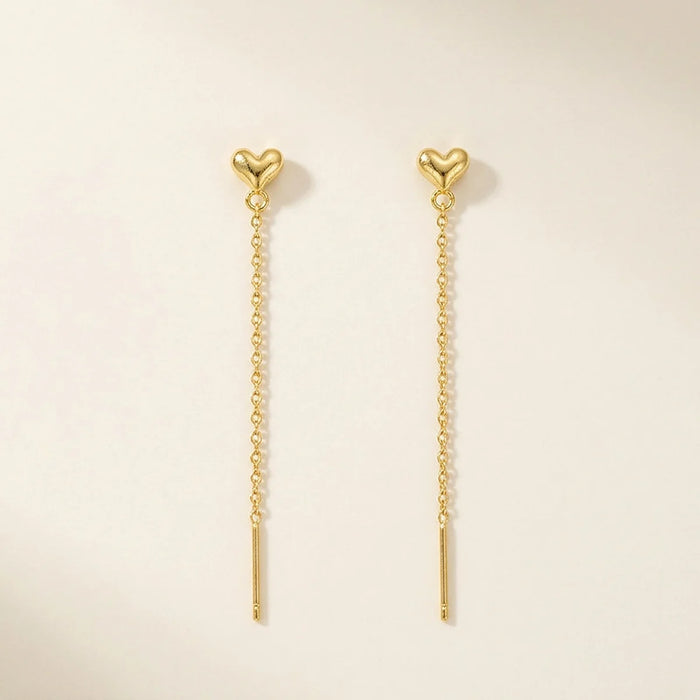 Gold heart earrings with long chain drop29,90 €
-
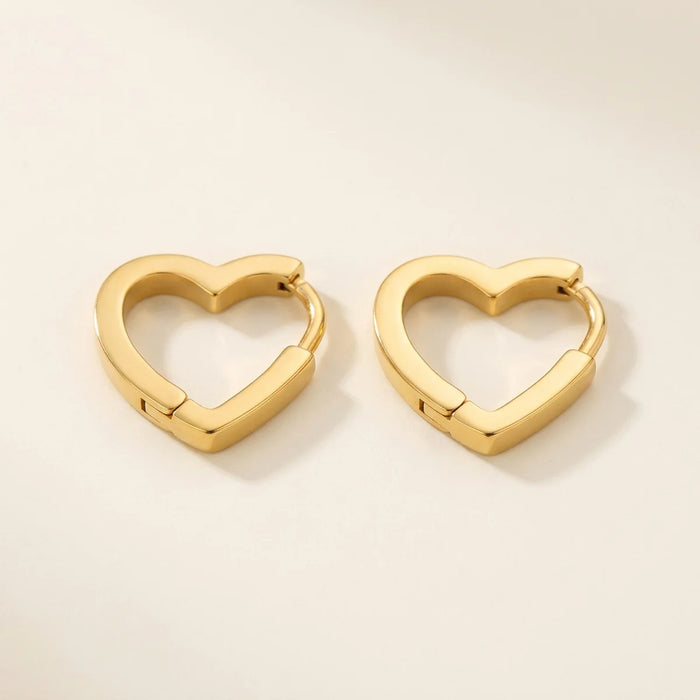 Heart hoop earrings in stainless steel, gold-tone or silver34,90 €
-
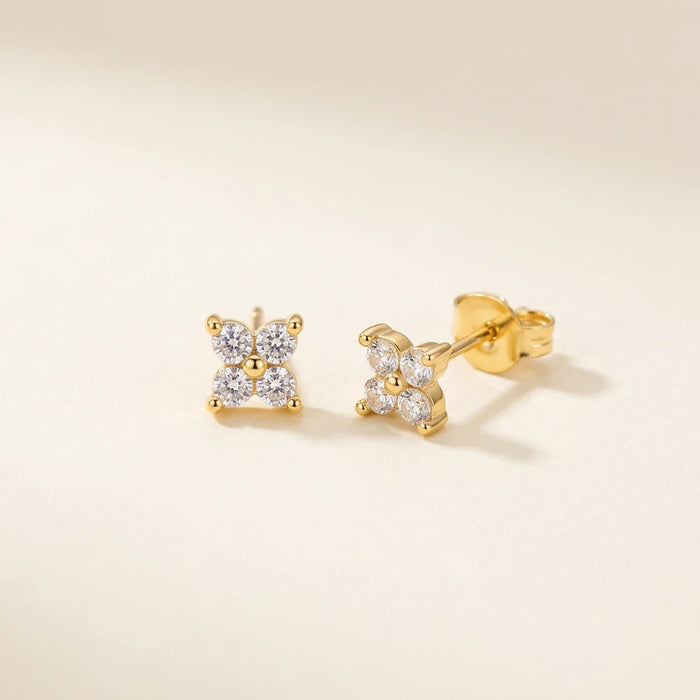 Star stud earrings in 925 sterling silver39,90 €
-
 Evil eye earrings with hamsa charm29,90 €
-
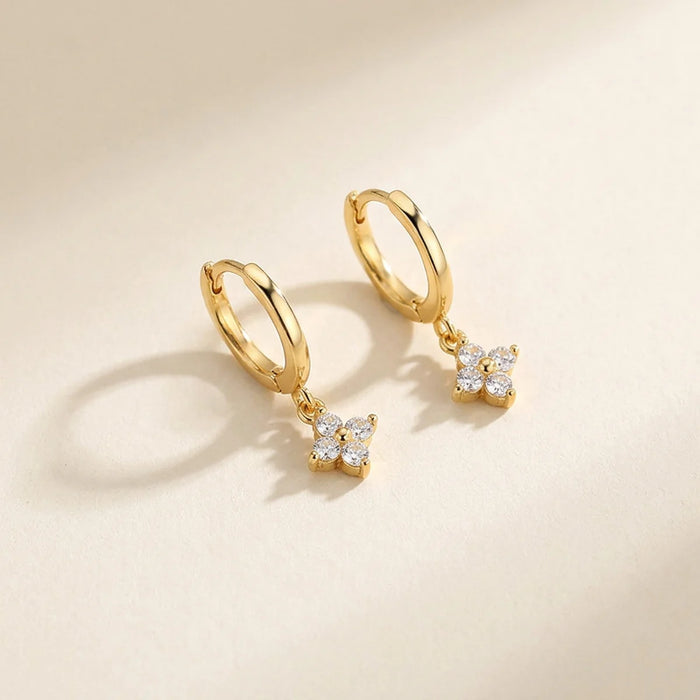 Clover earrings, small hoops with a cubic zirconia clover29,90 €
-
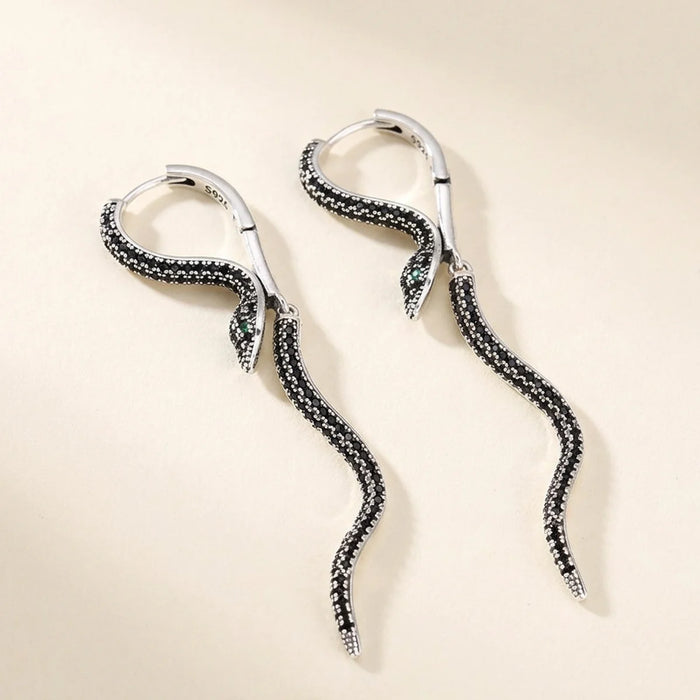 Snake earrings in 925 sterling silver39,90 €
-
 Chunky knot earrings in stainless steel29,90 €