Earring styles for men: studs, huggies, hoops, dangles and cuffs explained

Earring styles for men come down to six main families: studs, huggies, hoops, dangles, ear cuffs and cartilage pieces. Studs are the most discreet, huggies and small hoops add a little edge, and dangles and cuffs make a statement. Start with the style that fits your daily life, then build from there.
Earring styles for men at a glance
Here is the whole map in one table. Use it to see which style matches the look you want and the effort you are ready for.
| Style | What it looks like | Typical size | Best for | Visibility |
|---|---|---|---|---|
| Stud | A single point sitting flat on the lobe | 3–8 mm | Every day, office, first earring | Low |
| Huggie | A small, thick hoop that hugs the lobe | 8–12 mm inner diameter | Everyday edge, sport, stacking | Low to medium |
| Hoop | An open ring that hangs below the lobe | 12–20 mm | Weekends, casual and street looks | Medium |
| Dangle or drop | A short charm, bar or cross that moves | 1–3 cm drop | Evenings, events, music scenes | High |
| Ear cuff | A band that wraps the outer ear | One size, adjustable | Trying a look with no piercing | Medium |
| Cartilage piece | A small stud or ring on the upper ear | 16 gauge, 6–10 mm rings | Layered, personal styling | Medium |
No style belongs to one type of man. A banker can wear a hoop and a skater can wear a single tiny stud. The table is a starting point, not a dress code.
Stud earrings: the everyday classic
The stud is the default for a reason. It sits flat, it does not swing, and it goes with anything from a hoodie to a suit. If you only ever own one pair of earrings, this is it.
Shapes
- Round: the most neutral option. Works on every face shape.
- Square or princess-cut: sharper and a little more architectural. Pairs well with a strong jawline.
- Flat disc: a matte or brushed metal disc looks understated and modern.
- Cubic zirconia: a small stone adds sparkle. Keep it at 3–5 mm if you want it to stay subtle.
Sizes
Most men land on 5–6 mm. Go down to 3–4 mm if your workplace is conservative or your lobes are small. Go up to 7–8 mm if you want the stud to be seen across a room. One stud alone can be a size bigger than a pair, because it has less competition.
Finishes
Silver-tone is cool and calm. Gold-tone, usually gold-plated, adds warmth and works well with tanned or darker skin and with beards. Black is graphic and pairs naturally with dark clothes and tattoos. Explore our full range of stud earrings to see how each finish reads in real life.
Backs
Butterfly backs are the standard: quick to use and easy to replace. Screw backs take a few seconds longer but hold firmly, which helps if you sleep in your studs or play sport. Flat backs, used mostly on cartilage, sit flush against the skin and do not poke when you lie on your side or wear headphones.
Huggies and small hoops: a little edge
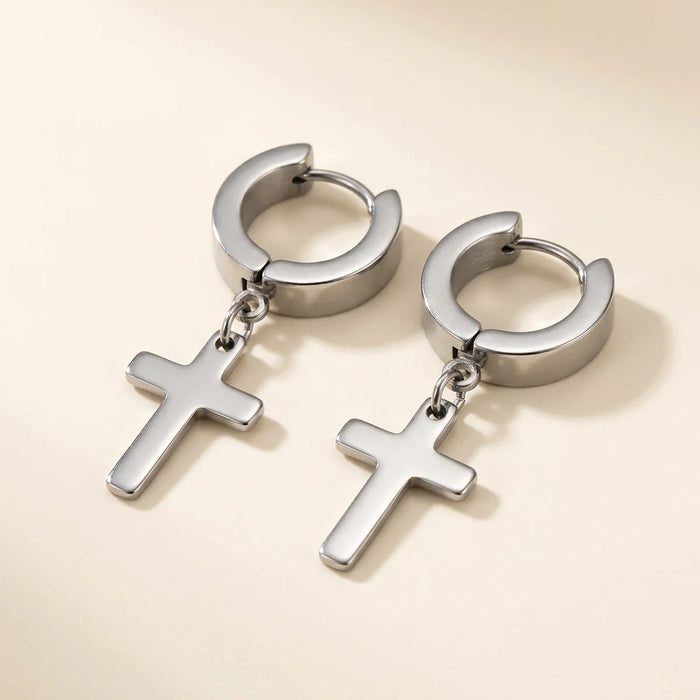
A huggie is a short, often thicker hoop that sits close to the lobe, almost hugging it. It is the natural next step after a stud. You get the shape of a hoop without the swing, and a hinged click closure means there is no back to lose.
Choosing the size
- 8 mm inner diameter: very snug, almost like a stud from the front.
- 10 mm: the most common choice for men. Sits neatly with a little space under the lobe.
- 12 mm: a bit looser and more visible. Good for thicker lobes.
Thickness matters as much as diameter. A 2–3 mm thick huggie looks solid and masculine. A thin 1 mm wire looks delicate and works better stacked with other pieces.
Why huggies work so well
They stay put during sport, they do not catch on collars, and they sit comfortably against a phone. They also stack well: a huggie on the lobe and a small stud above it is one of the cleanest two-piece looks you can wear.
Huggie or small hoop?
The line between the two is blurry, but here is a simple test. If the ring closes tight under the lobe and barely moves, it is a huggie. If it hangs with a visible gap and swings when you walk, it is a small hoop. Huggies feel more polished and low key. Small hoops feel looser and more relaxed. Many men own one of each and switch depending on the day.
Hoops: from subtle to bold
Once a ring hangs clearly below the lobe, it becomes a hoop. Hoops have been worn by men for centuries, from sailors to rock musicians, and they still carry a slightly adventurous feel.
Small hoops (12–15 mm)
Small hoops are visible but relaxed. They work with T-shirts, overshirts and denim. A single hoop in one ear is a classic casual look.
Medium and large hoops (16–20 mm and up)
Bigger hoops are more of a statement. They suit longer hair, festival outfits and streetwear. If you are new to them, try one ear first and see how it feels.
Plain or detailed
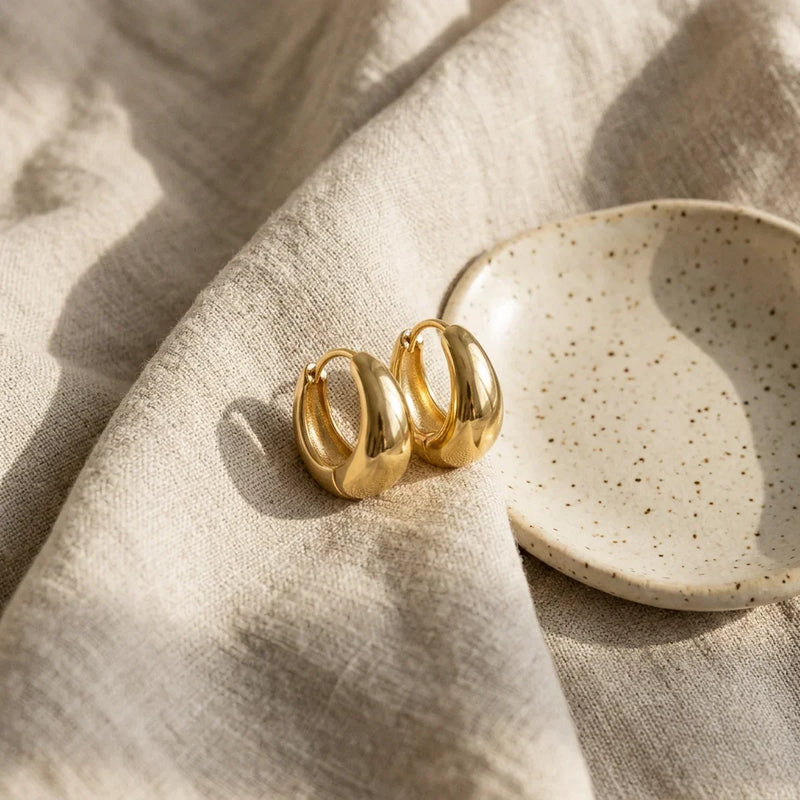
Smooth, polished hoops are the most versatile. Hammered, twisted or faceted surfaces catch the light and add texture. A hoop in a gold-tone finish looks warmer, while silver-tone and black feel more urban.
Hoops and hair
Hair length changes how a hoop reads. With a buzz cut or a fade, the hoop is fully on show and looks bold, so a smaller size often feels right. With hair over the ears, a slightly larger hoop peeks out as you move and looks more relaxed. Tucking hair behind one ear to show a single hoop is a simple trick that always works.
Dangle and drop earrings for men
Dangles move. That is their appeal. A short drop catches the eye every time you turn your head, which makes them the most expressive of all earring styles for men.
Common shapes
- Cross: one of the most familiar men's dangles, worn for style or for personal meaning.
- Bar or spike: a clean vertical line that elongates the face.
- Chain: a short length of chain hanging from a stud or huggie.
- Charm on a hoop: a small pendant hanging from a huggie, easy to swap.
How to wear them
Keep the drop short, around 1–3 cm, if you want it to feel wearable. Pair a dangle in one ear with a plain stud or nothing in the other, so it stays the focal point. Dangles look best with an open collar or a crew neck, where nothing crowds the jaw. Save them for evenings, weekends and events rather than a formal office.
Mixing a dangle with other pieces
A dangle already does a lot of work, so keep the rest quiet. A small stud higher on the same ear is fine. A second dangle on the same side usually is not. If you wear a necklace or a chain bracelet, choosing the same metal ties everything together and stops the look from feeling busy.
Ear cuffs and cartilage earrings
If you want to build a more layered look, the upper ear is where it happens.
Ear cuffs
An ear cuff wraps around the outer rim of the ear and holds by gentle pressure. Most need no piercing at all, which makes them a low-risk way to test a bolder look. Slide it onto the thinner middle part of the ear, then move it up to where it feels secure. A plain silver-tone band is the most masculine starting point. Browse our ear cuffs that need no piercing for slim and wider options.
Cartilage piercings
A helix piercing on the upper rim is the most common cartilage piercing for men. It is usually done at 16 gauge (about 1.2 mm), and healing takes much longer than a lobe, often from several months to a year. Once healed, a small ring or flat stud there adds a lot of character with very little metal.
Building a stack
A simple formula: one piece on the lobe, one on the upper ear, same finish. For example, a stud on the lobe with a thin ring on the helix. Keep the total to two or three pieces per ear and the look stays sharp.
Metals, finishes and sensitive ears
The style decides the shape. The metal decides how it looks over time and how your skin feels about it.
Which metals to look for
- 925 sterling silver: 92.5% silver. Bright, classic and usually well tolerated. It can darken with time, but it cleans up easily.
- 316L stainless steel: tough, scratch resistant and affordable. It contains nickel bound in the alloy, which releases very little, so most people wear it comfortably.
- Titanium: very light and nickel-free in its implant grade. A strong choice for sensitive ears and new piercings.
- Gold-plated: a layer of gold over a base metal. It gives the warm look of gold at a fraction of the price. Thicker plating and a good base metal last longer.
Nickel and irritation
Nickel is the most common reason ears get red, itchy or sore. If that happens to you, skip unknown alloys and stick to titanium, 316L steel or sterling silver. No material is guaranteed for every person, so if you have a known allergy, ask a doctor.
Matching finish to wardrobe
The easiest rule is to match your earring to the metal you already wear most: a watch, a ring, a belt buckle. Silver-tone suits cool colours like grey, navy and black. Gold-tone suits warm tones like olive, camel and brown. Black works with almost everything and adds a modern edge.
A note on black finishes
Black earrings are usually steel or titanium with a dark coating. They look sharp and graphic, but the coating can wear at the edges over months of daily use, especially on a post that rubs against the piercing. Treat them gently and they keep their colour longer.
Caring for your earrings
Good care keeps any earring style looking sharp for longer. It takes a minute a week, not an hour.
Everyday habits
- Last on, first off: put earrings in after aftershave, cologne and hair products, and take them out before showering or swimming.
- Wipe after wearing: a soft, dry cloth removes skin oils and sweat that dull the surface.
- Store them apart: a small pouch or a box with compartments stops pieces from scratching each other.
Cleaning by material
Sterling silver darkens naturally when it meets air and moisture. A silver polishing cloth brings it back quickly. Stainless steel and titanium only need warm water, a drop of mild soap and a soft brush. Gold-plated pieces need the gentlest touch: no abrasive cloths, no harsh chemicals, just a soft wipe, because rubbing too hard can wear through the plating.
Keeping posts clean
Wipe the post and the back now and then with a little rubbing alcohol on a cotton pad, especially if you share earrings between ears or wear the same pair every day. Clean posts are kinder to your piercing.
How to pick a style for your face and life
Choosing between earring styles is less about rules and more about a few honest questions.
What does your day look like?
- Formal office: a small stud or a slim huggie.
- Creative or casual job: huggies, small hoops, even a short dangle.
- Active life, sport, helmets: flat studs or snug huggies with secure closures.
What does your face say?
- Round face: vertical shapes like bars and short drops add length.
- Long or narrow face: round studs and hoops add width.
- Strong jaw or beard: slightly larger studs or thicker huggies hold their own.
One ear or two?
A matching pair looks balanced and clean. A single earring feels more personal and casual. There is no rule about which side to choose, and the old left or right myths are long gone. Our guide on which ear guys wear earrings in covers that question in full.
Does age matter?
Not really. A man in his twenties might go for stacked hoops and a dangle, while a man in his fifties might prefer one clean stud. Both are simply choosing what fits their style. The quality and the size of the piece matter far more than the number on your passport.
How to build a small collection
You do not need a drawer full of jewellery. Three or four pieces cover almost every situation: one pair of everyday studs, one pair of huggies, one hoop and one statement piece for nights out. Keep them in the same finish at first, so anything goes with anything. Once you know what you reach for most, add a second finish or a cartilage piece.
Where to start with Odelys
These four pieces cover the main earring styles for men, from everyday to statement. Wear them alone, in pairs or mixed across both ears.
- Men's silver ear studs: the clean, everyday stud that goes with everything.
- Men's huggie earrings: a snug ring with a click closure, ideal as your second style.
- Gold hoop earrings for guys: a warm gold-tone hoop for casual days and weekends.
- Men's dangle earrings: a short drop with movement, made for evenings out.
Want to see everything side by side? Visit the full men's earrings collection and find the style that feels like you.