How to make clip on earrings comfortable, from the first minute to the end of the day
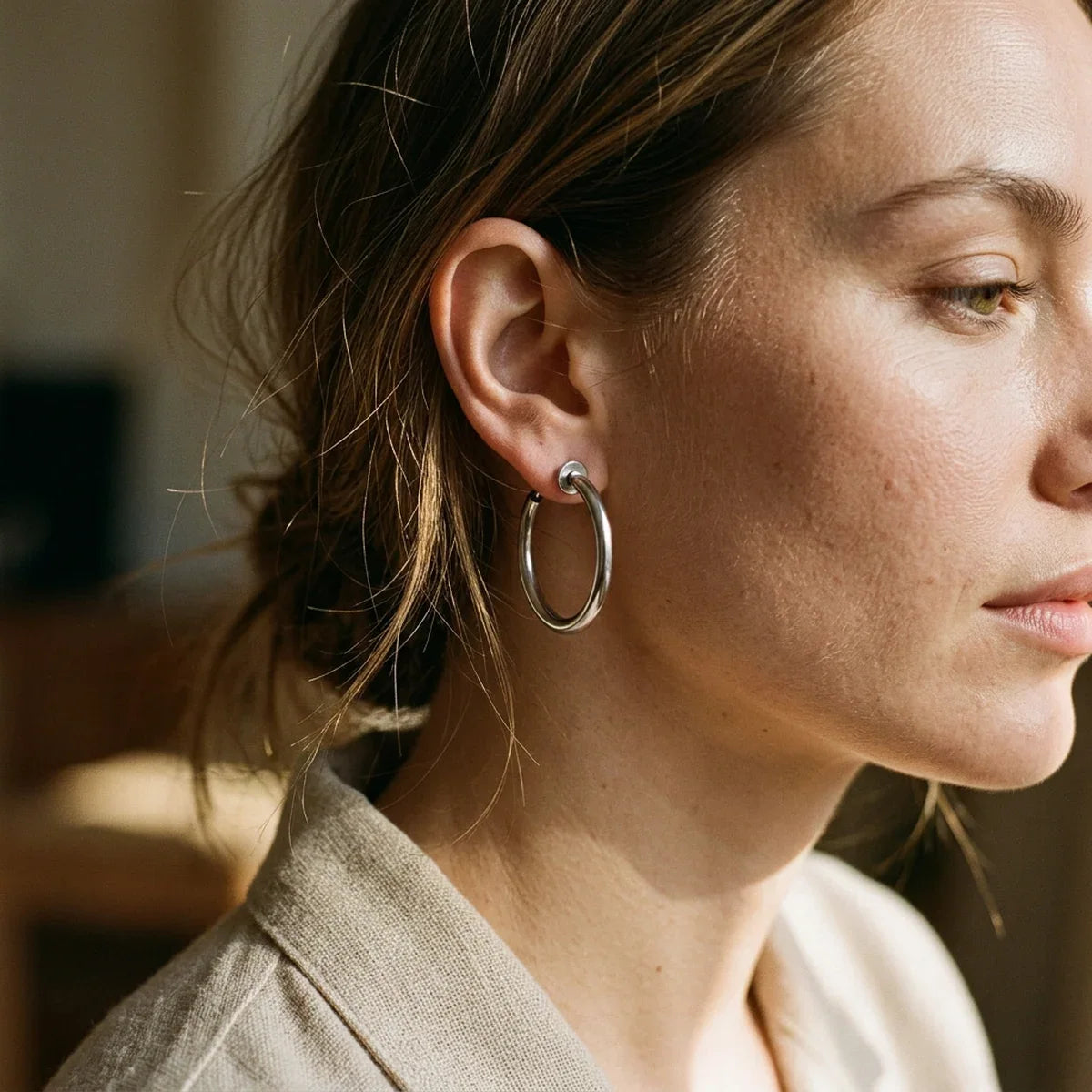
How to make clip on earrings comfortable? Place the clip on the soft centre of the lobe, loosen a clip that pinches, add a thin silicone pad, choose lighter pieces and build up wearing time slowly. Most discomfort comes from too much pressure on too small an area, and every fix below spreads or reduces that pressure.
Why clip on earrings hurt: causes and quick fixes
A clip on earring holds by squeezing the lobe between a front piece and a back plate. That is the whole mechanism, and it explains almost every complaint. If the squeeze is too strong, too small or in the wrong place, the lobe starts to ache after twenty or thirty minutes. The good news is that each cause has a simple fix, and you rarely need to give up on a pair you love.
| What you feel | Likely cause | Quick fix |
|---|---|---|
| Sharp pinch from the start | Clip tension too high | Open and close the hinge gently a few times, or adjust a screw clip |
| Ache after half an hour | Pressure on the thin edge of the lobe | Move the clip higher, to the soft centre |
| Red mark on the back of the lobe | Hard metal plate | Add a soft silicone pad |
| Earring slips or tilts | Too heavy for the clip | Choose a lighter style or a cuff |
| Itching or burning | Skin reacting to the metal | Switch to steel, silver or titanium and keep wear short |
| Throbbing at the end of the day | Worn for too long | Take short breaks and build up time |
Read the table from the left: start from what you feel, not from what you think the problem is. A pinch and an ache have different causes, and the fix for one can make the other worse.
It also helps to know that comfort is not a fixed property of an earring. The same pair can feel perfect on one person and painful on another, because lobes differ in thickness, softness and size. That is why a friend's favourite clip ons may not work for you, and why a few minutes spent adjusting a pair is time well invested. Think of it like breaking in a new pair of shoes: a little effort at the start pays off for years.
Find the right spot on your lobe
Where you place a clip on earring matters more than how tight it is. The edge of the earlobe is thin and full of nerve endings, so even light pressure there feels sharp. The centre of the lobe, where a piercing would normally be, is softer and thicker and can carry the same pressure without complaint.
Look in the mirror and place the front of the earring where a stud would sit, then close the clip so the back plate rests on the fleshy part behind. If the earring hangs, check that the front piece is level; a tilted earring pulls on one side of the lobe and tires it faster. On small lobes, a smaller clip helps: a big back plate on a small lobe ends up pressing on the edge whatever you do.
A simple test tells you whether the spot is right. After clipping the earring on, gently pinch the lobe just above and below it with two fingers. If the skin around the clip still feels soft and you can move the earring a millimetre or two without pain, the position and pressure are good. If the skin feels tight and white around the clip, it is either too close to the edge or too tight, so open it and try again a little higher.
If you are unsure what each part of the ear is called, our guide to ear piercing names shows the lobe, helix and every other spot, which also helps if you later want an ear cuff higher up.
Clip ons for different types of lobes
Lobes come in every shape, and a few simple rules make finding the right pair much easier.
- Small or thin lobes: choose small clips and light studs or huggie-style hoops. A large back plate will always reach the edge of a small lobe, so smaller is more comfortable here. Magnetic studs and ear cuffs are often the easiest options.
- Thick or full lobes: screw clips are your friend, because you can open them wide enough to sit on the soft centre without squeezing. Spring clips with a generous gap also work well.
- Long or stretched lobes: place the clip higher than you think, closer to where the lobe meets the face. The upper part is firmer and spreads the pressure better.
- Lobes of two different sizes: this is more common than people think. Adjustable screw clips let you set each side separately, so both feel the same.
If you used to have pierced ears and the holes have closed, the area can be slightly firmer. Start with lighter pieces and shorter sessions while you find what suits you.
Adjust the clip tension
Many clips are simply set too tight when they leave the factory. Before you give up on a pair, try loosening it.
- Hinged spring clips: open the clip fully and close it slowly ten or twenty times. The spring softens a little with use, the same way new shoes soften. Never bend the hinge or the arm with pliers: you risk breaking the spring or scratching the finish.
- Screw clips: these have a small screw behind the lobe. Turn it until the pad just touches the skin, then a quarter turn more. That is usually enough to hold without pain.
- Ear cuffs: open the ring very slightly with your fingers, slide it on, then close it just until it feels secure. A cuff should rest on the ear, not pinch it.
The aim is the lightest pressure that still holds the earring through a normal day. Test by nodding and turning your head a few times in front of the mirror.
Add padding between the clip and your skin
Small silicone pads, sometimes called clip on earring cushions, stick or slide onto the back plate of the clip. They do two jobs at once: they spread the pressure over a larger area, and they replace hard metal with a soft, slightly grippy surface. Many people find they can wear a clip for hours longer with a pad than without.
Choose clear pads so they stay invisible, and replace them when they lose their grip or start to yellow. If you do not have pads at hand, a tiny piece of medical tape on the back plate is a good emergency fix for an evening out.
Padding also helps an earring stay in place, because the soft surface holds the skin better than smooth metal. That means you can often loosen the clip a little more without the earring slipping, which is the most comfortable combination of all.
Pads come in different thicknesses. Thin ones are almost invisible and suit small studs; thicker, softer cushions are better for heavier earrings or very sensitive lobes. Some clips already have a small rubber or plastic pad built in: check it is still soft and replace it if it has hardened or cracked, because a hard old pad can feel worse than bare metal.
Choose lighter styles and the right closure
Weight is the second big factor. A heavy drop hanging from a clip pulls down on the lobe with every step, and the clip has to squeeze harder to hold it. Small hoops, studs and cuffs are naturally more comfortable than long statement pieces.
As a rough guide, a pair that weighs a few grams per earring is easy to wear all day on a clip, while anything that swings well below the lobe is better kept for a few hours. Hollow designs, thin wires and light alloys keep weight down without making the earring look small.
Not all no-piercing closures feel the same:
- Spring clip: quick to put on, firm hold, best for small hoops and studs.
- Screw clip: adjustable pressure, ideal if your lobes are sensitive or of different thickness.
- Magnetic: two magnets hold a stud with very light, even pressure; not suitable if you use a pacemaker.
- Ear cuff: sits on the thin rim of the ear and barely presses at all when sized correctly.
For a deeper look at every type of back, including push backs and flat backs for pierced ears, read our guide to types of earring backs.
What about turning your favourite pierced earrings into clip ons? Clip on earring converters exist: small clips that hold the post of a pierced earring and grip the lobe. They are handy for a special pair you cannot find in a clip version, but they add weight and can tilt the earring forward, so they work best with light studs. For everyday wear, an earring designed as a clip on from the start is usually more comfortable and more secure.
Build up wearing time slowly
Lobes that are not used to clips need time. Wearing a new pair for eight hours on day one is the surest way to end up with a sore ear and a bad opinion of clip ons.
- Start with one or two hours at home.
- Add an hour each day for a week.
- Take a five-minute break every few hours: unclip, gently massage the lobe, clip back on.
- Keep your heaviest or tightest pairs for short occasions, such as a dinner or a ceremony.
Most people find that after a week the same pair feels noticeably softer, partly because the clip loosens and partly because the lobe gets used to it.
Planning a long event, such as a wedding or a gala? Wear the pair at home for a couple of hours in the days before, to check the fit. On the day, put the earrings on as late as possible, keep a pair of silicone pads in your bag and slip the earrings off discreetly during dinner for a few minutes. A small, light pair for the ceremony and a bolder one for the evening is another clever way to share the load between the morning and the night.
Look after sensitive skin
Sometimes the problem is not pressure but the metal itself. Itching, redness or a burning feeling where the clip touches the skin can be a reaction to nickel or other metals in the alloy. Clip ons touch the skin for hours, so material matters as much as with pierced earrings.
Look for stainless steel, 925 sterling silver or titanium where possible, keep the clip clean and dry, and give your skin a break if it reacts. Our guide to the best earrings for nickel allergy explains which metals are usually better tolerated. If a reaction does not settle after you remove the earrings, ask a pharmacist or doctor.
Care keeps clips comfortable for longer, too. Wipe the back plate after wearing to remove skin oils and make-up, which can make the surface sticky and irritating. Store clip ons closed but not under strain, in a small box rather than loose in a bag, so the springs do not get bent. Check the hinge every few weeks: if it starts to wobble, a jeweller can usually tighten or replace it for little cost, and a stable hinge holds better with less pressure.
Comfortable earrings without piercing we recommend
These styles are chosen for light weight and gentle pressure:
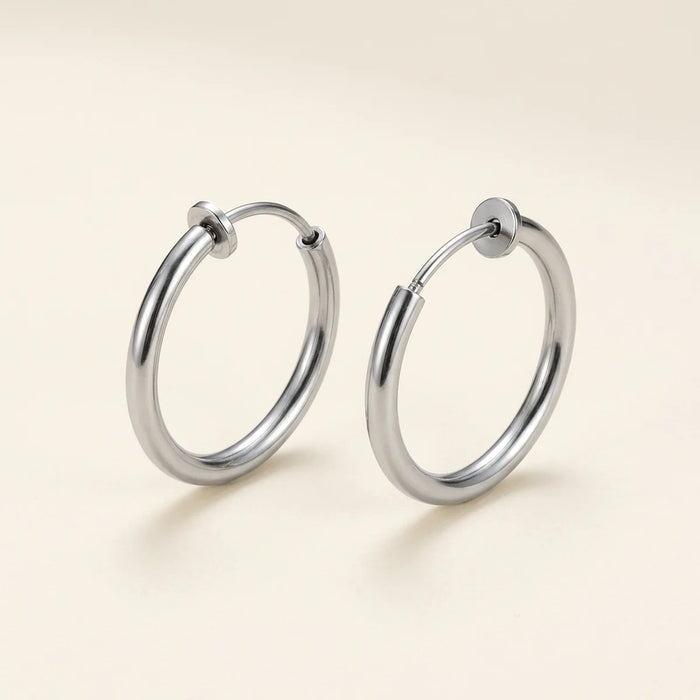
- Clip on hoop earrings: a small 10 mm silver-tone hoop in stainless steel with a spring clip, light enough for all-day wear.
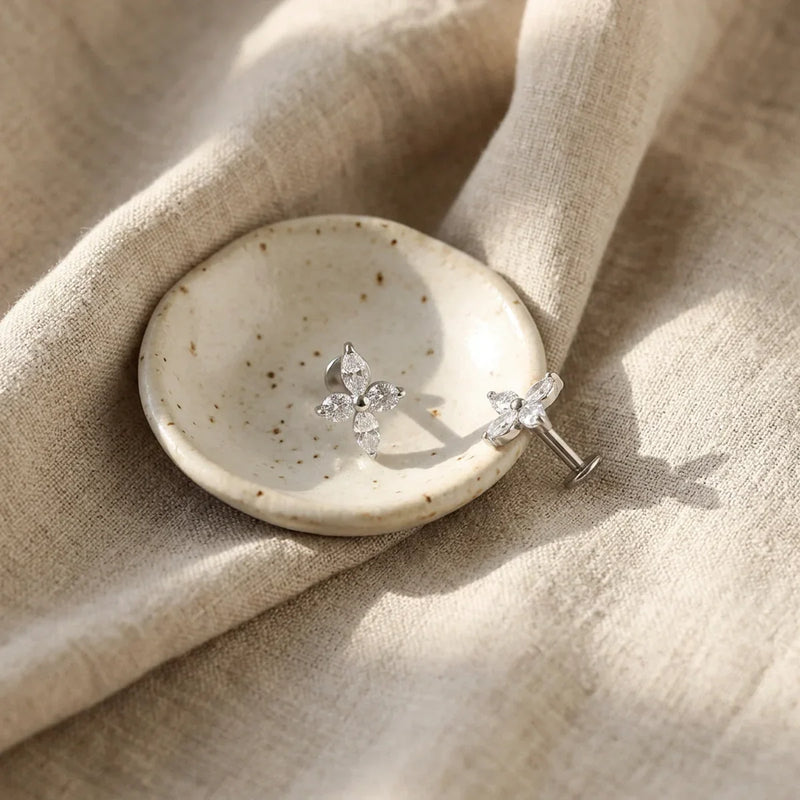
- Magnetic earrings: a 6 mm stainless steel stud with cubic zirconia, held by a magnet instead of a clip.
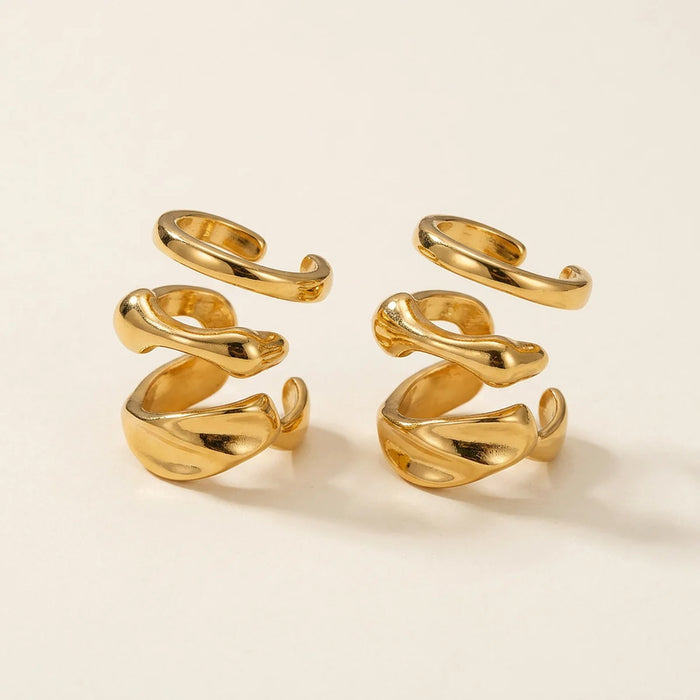
- Gold-tone ear cuff: a chunky stainless steel cuff that rests on the rim of the ear.
- Silver ear cuff: a smooth, domed C-shape that slides on in seconds.
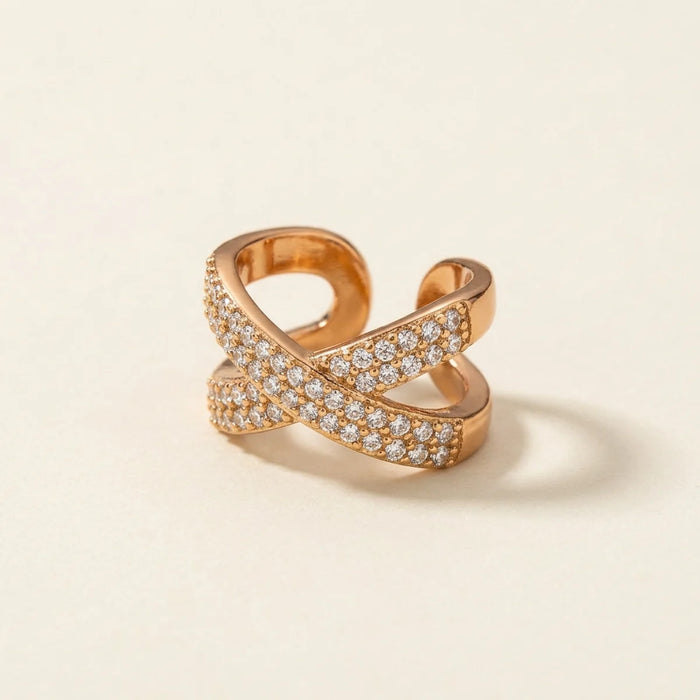
- Minimalist ear cuff: two slim crossed bands with cubic zirconia for a delicate look.
You will find every style, from cuffs to magnets, in our clip on earrings collection.
When to stop and rest your ears
Comfort tricks help, but your body has the last word. Take the earrings off and give your lobes a day off if you notice numbness, a deep dent that does not fade after an hour, broken skin, swelling or a rash. Wear them again only when the skin looks and feels normal, and start with shorter sessions.
It is also worth listening to small signals before they become big ones. A slight warmth or tingling after an hour is your lobe telling you it needs a break; five minutes off now can save you a sore ear tomorrow. If one ear always hurts more than the other, the problem is usually the clip on that side, so compare the two and loosen the tighter one.
Children and teenagers often love clip ons for parties. Keep their sessions short, check the lobes afterwards and avoid magnets with young children, who might swallow them.
With the right spot, the right tension and a little padding, clip on earrings can be as comfortable as pierced ones for most of the day. Start small, listen to your ears and you will find the pairs you forget you are wearing.