Ear piercing names: a simple map of every placement and what to wear

Ear piercing names describe where on the ear the hole sits. The lobe is the soft bottom, the helix runs along the outer rim, the tragus is the small flap by your face, and the conch, daith and rook sit in the inner folds. Each spot has a name, a typical jewellery style and its own look.
Ear piercing names at a glance
Start with the map. The chart below lists the most common ear piercing names, where each one sits and the jewellery people usually wear there once it has healed. Screenshot it before you visit a studio.
| Name | Where it sits | Typical jewellery |
|---|---|---|
| Lobe | The soft, fleshy bottom of the ear | Studs, huggies, hoops, drops |
| Upper lobe | Higher on the lobe, below the cartilage | Small studs, tiny huggies |
| Helix | The outer rim of the upper ear | Flat back studs, small hoops |
| Forward helix | The front of the rim, where it meets the face | Tiny flat back studs |
| Flat | The flat cartilage just inside the upper rim | Flat back studs with a decorative top |
| Tragus | The small flap in front of the ear canal | Flat back studs, small hoops |
| Anti-tragus | The bump opposite the tragus, above the lobe | Flat back studs, curved bars |
| Inner conch | The central bowl of the ear | Flat back studs |
| Outer conch | The flat area between the inner ridge and the rim | Studs or a hoop that wraps the rim |
| Daith | The innermost fold, just above the ear canal | Small hoops, clickers, flat back studs |
| Rook | The vertical fold above the daith | Curved bars, small rings |
| Snug | The inner ridge, across from the rim | Curved bars |
| Industrial | Two holes in the upper ear joined by one bar | Long straight barbell |
Two quick notes before you dive in. First, names can vary a little from studio to studio, so if you are unsure, point to the spot in a mirror. Second, anatomy is personal. Not every ear has a deep enough fold for a rook, a snug or a daith, and a good piercer will tell you honestly whether a placement suits your ear.
Lobe piercings: first, second, third and upper lobe
The lobe is where almost everyone starts. It is soft tissue rather than cartilage, which is why it is the most common first piercing and the easiest place to wear almost any style. Your first lobe hole sits roughly in the centre of the lobe. A second and third lobe hole are usually placed in a line or a gentle curve above it, following the shape of your ear.
An upper lobe piercing sits as high as the lobe goes, just before the cartilage begins. It looks delicate and fills the space between your lobe stack and the upper ear.
What fits here? Pretty much everything. Lobes take studs, huggies, small and large hoops and drop earrings. For your first hole you can go bolder, with a hoop or a drop. As you move up, scale down: a small stud in the second hole and a tiny huggie in the third keep the line neat. Many people wear a classic butterfly back in the lobe, while a flat back is more comfortable if you sleep on that side or wear headphones a lot.
If your lobes react to cheap metal, look at your material before your style. Our hypoallergenic earrings are made from metals such as titanium, 316L steel or 925 silver, which many people with sensitive skin tolerate better. No metal suits everyone, so pay attention to how your ears feel.
Helix, forward helix and flat: the upper ear
Move up from the lobe and you reach cartilage. The helix is the curved outer rim of the upper ear, and it is one of the most popular cartilage piercings. You can wear one, or line up a double or triple helix along the rim for a clean, graphic look.
The forward helix sits at the front of that rim, where the ear meets the side of your face, just above the tragus. It is a small area, so most people wear tiny studs there, often two or three in a short vertical line.
The flat piercing goes through the flat stretch of cartilage just inside the upper rim. It gives you a wide, smooth canvas, which makes it a favourite for a decorative top: a small star, a cluster or a single stone. From the front it is subtle; from the side it frames the whole upper ear.
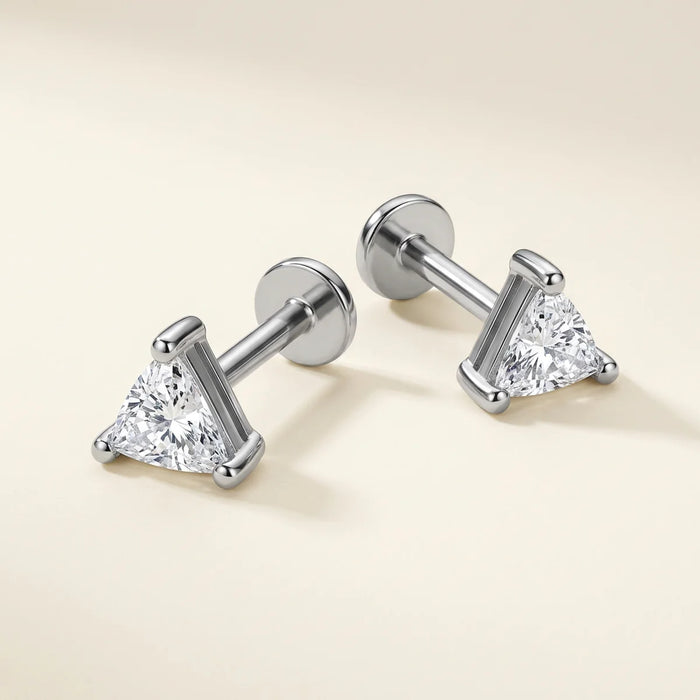
For all three, flat back studs are the usual choice. A flat back is a straight post with a smooth disc behind the ear instead of a butterfly, so there is nothing to poke your head or snag on your pillow. Once a helix has fully healed and your piercer agrees, a small hoop or huggie that hugs the rim is another option. You will find posts and tops for every upper-ear spot in our cartilage earrings.
Tragus, anti-tragus and snug: the small folds
The tragus is the small, thick flap of cartilage that partly covers the opening of your ear canal, right next to your cheek. A tragus piercing goes straight through it. It is small, so the jewellery is small too: usually a short flat back stud with a tiny top, or a small hoop once healed. If you wear in-ear headphones, keep in mind that they sit right against this spot.
The anti-tragus is the raised bump on the opposite side, just above your lobe. Its name simply means opposite the tragus. Not everyone has a pronounced anti-tragus, so this is one of the placements that depends most on your anatomy. When it works, a small stud or a short curved bar sits there like a little accent above the lobe.
The snug runs through the inner ridge of cartilage that sits parallel to the outer rim, called the antihelix. The jewellery enters and exits on the front of the ear, so it is usually a small curved bar with a ball or a gem at each end. The snug is a striking, less common choice, and because the ridge is firm and narrow, piercers look carefully at your ear shape before suggesting it.
These three placements sit close to each other, so they work well together. A tiny stud in the tragus with a curved bar in the snug creates a balanced frame around the middle of your ear.
Conch, daith and rook: the inner ear
The conch takes its name from the shell, because the inner ear has a shell-like bowl. An inner conch piercing goes through the centre of that bowl, close to the ear canal. It suits a flat back stud with a larger or more decorative top, since there is plenty of room around it.
An outer conch sits on the flat cartilage between the inner ridge and the outer rim. Here you can wear a stud, or a hoop that wraps around the edge of the ear. That wrapped conch hoop is one of the most recognisable looks in a styled ear, but getting the diameter right matters: too small and it pinches, too big and it sticks out.
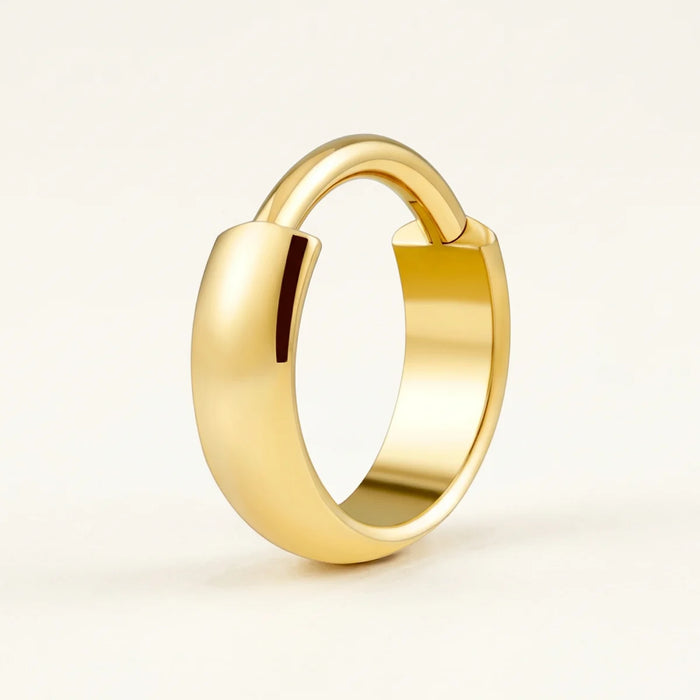
The daith sits in the innermost fold of cartilage, just above the ear canal and next to the start of the helix. Its classic jewellery is a small hoop or a clicker that curls through the fold, but a neat flat back stud with a sparkly top also looks deliberate there.
The rook is a vertical piercing through the fold of the antihelix, just above the daith. The jewellery enters on the top and exits underneath, so it is usually a curved bar or a small ring. Like the snug, it needs a defined fold, which not every ear has.
Industrial and other two-hole piercings
An industrial is not a single placement but a combination. Two holes, usually one in the forward helix area and one further back on the outer helix, are joined by a single straight barbell that runs diagonally across the upper ear. The result is bold and architectural, a look you notice from across the room.
Because one bar passes through two cartilage holes, an industrial needs both holes to line up well and both to heal together. Piercers often check the shape and angle of your upper ear before they agree to it, and some suggest doing two separate helix piercings first. The jewellery is a long barbell, typically measured to your ear.
A few other names you may hear:
- Orbital: two holes in the same area, often the lobe or the helix, joined by one ring so it looks like it orbits the ear.
- Double or triple helix: two or three holes in a row along the outer rim.
- Auricle: a piercing on the outer rim at about the middle of the ear, between the helix and the lobe.
If any of these appeal to you, take a photo of a look you like to your appointment. It is far easier for a piercer to judge whether your ear can carry it when you can show exactly what you mean.
Which jewellery fits each piercing
Knowing the names is half the job. The other half is matching the right closure and size to each spot. A few simple rules cover most cases.
Studs and flat backs. For lobes, standard studs with a butterfly back are fine. For cartilage, a flat back is the comfortable choice, because the disc lies flat behind the ear. Flat backs close in two main ways. Internally threaded posts have the thread inside the post, so the screw never drags through the piercing. Threadless posts use a slightly bent pin that you push into the post and that stays in by tension.
Hoops and huggies. Lobes take almost any diameter. Cartilage needs a closer fit: small huggies sit well on a helix, while an outer conch needs a larger hoop to wrap the rim. A multi-size set is a sensible way to find your diameter.
Gauge and length. Gauge is the thickness of the post. Many lobe earrings use 20G (0.8 mm), while cartilage jewellery often comes in 18G (1.0 mm) or 16G (1.2 mm). Length matters too, especially in thicker cartilage. Your piercer can tell you the gauge and length you currently wear, so ask before you buy.
Material. For spots where jewellery stays in for weeks at a time, choose a metal you know your skin likes. Implant-grade titanium is a common pick for sensitive ears, and 316L steel is another widely used option. Browse posts and discs made for these spots in our flat back earrings.
How to build a balanced ear
A curated ear looks planned, but the idea behind it is simple: give the ear a focal point and let the rest support it. Here is a step-by-step way to plan yours.
- Pick an anchor. Choose one piece that leads the look, such as a bold huggie in your first lobe, a conch hoop or a sparkly daith stud.
- Scale down as you go up. Bigger pieces at the bottom, smaller ones higher up. This mirrors the natural shape of the ear and keeps it light.
- Leave some space. Empty cartilage between pieces is not wasted. It lets each one breathe and stops the ear from looking crowded.
- Repeat one detail. Echo a shape, a stone or a finish in two places, for example a star in the flat and a star in the lobe.
- Choose one metal tone, or mix with intention. All gold tone or all silver tone feels calm. Mixing works best when you split it clearly, such as silver-tone studs with one gold-tone hoop.
Think about both ears together, too. Many people keep one side busier and the other quieter, which looks relaxed rather than mismatched.
Not ready for a new hole? An ear cuff gives you the look of a helix or conch piercing without one. It slides onto the cartilage and stays put by gentle pressure, so you can try a placement before you commit, or simply add height to your stack for an evening. You can see bold and delicate shapes in our ear cuffs. Clip-ons and magnets work too: see how earrings without piercing compare.
Pain, healing and when to ask a piercer
This guide is about names and styles, not medical advice, so keep these points general and let a professional piercer guide your own choices.
Pain is personal. Most people describe a lobe piercing as quick and mild. Cartilage piercings are generally felt more, and thicker spots such as the daith, rook, snug and industrial are often described as more intense. How it feels for you depends on your ear, your mood and the skill of the person piercing.
Healing times vary widely. Commonly cited ranges are around six to eight weeks or more for a lobe, and anywhere from several months to a year or longer for cartilage. These are rough averages, not promises. Sleeping on a fresh piercing, knocking it, or changing the jewellery too early can all slow things down.
A few habits help in general:
- Get pierced at a professional studio with a needle, not a piercing gun, for cartilage.
- Follow the aftercare your piercer gives you, and do not twist or play with the jewellery.
- Wait until your piercer says the piercing is healed before you switch to hoops or decorative tops.
- If something feels wrong, such as heat, swelling or pain that grows instead of fading, see your piercer or a doctor.
Once a piercing has settled, you can start to play with jewellery. That is the fun part.
Pieces to start with for each spot
Once your piercer gives you the green light, these pieces cover the most popular placements, from the rim to the inner ear.
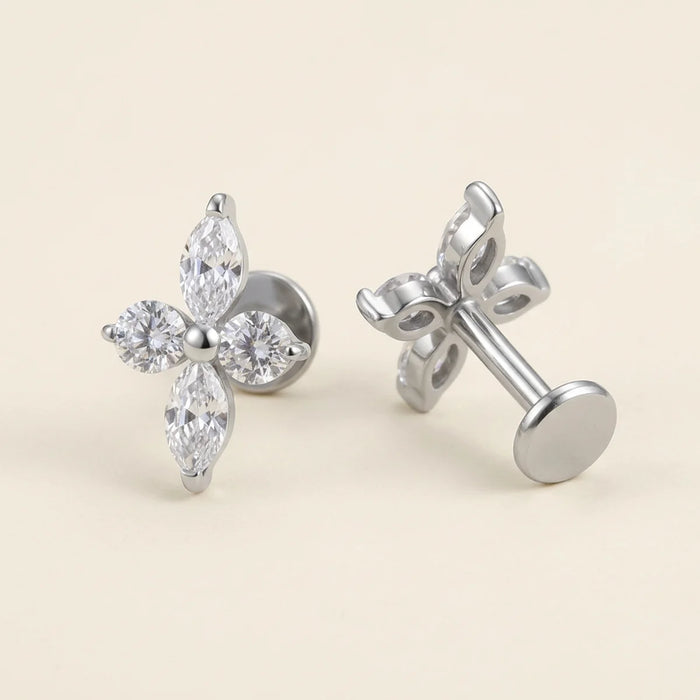
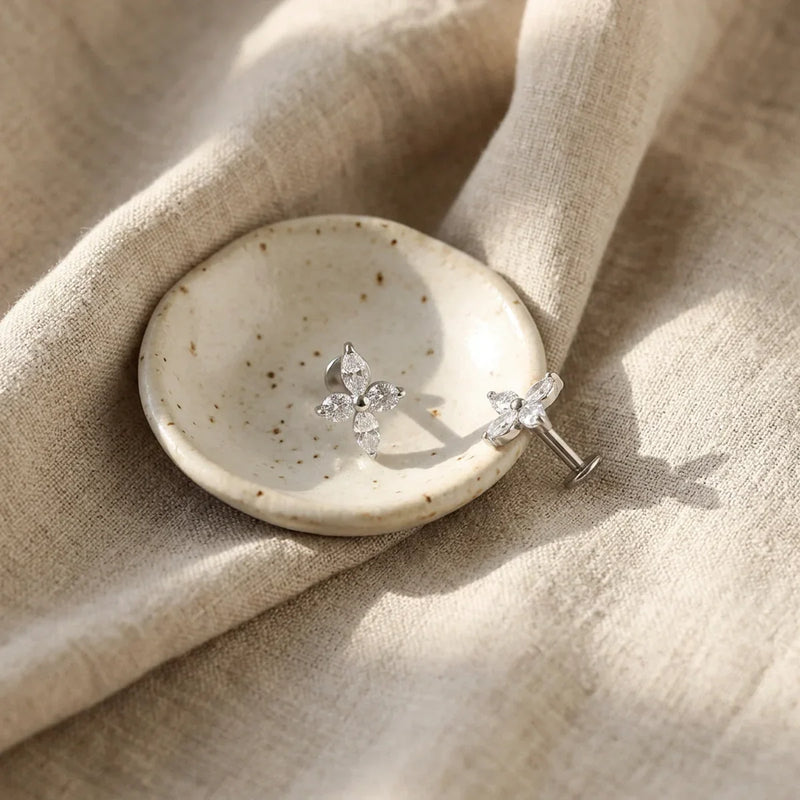
- Titanium flat back earrings with a star: ASTM F136 implant-grade titanium, a 16G internally threaded post and a cubic zirconia star, made for the helix, flat or lobe.
- Daith earrings: a threadless push-in post in G23 titanium and 316L steel with a cubic zirconia top and a flat back, also suited to conch, tragus or helix.
- Conch hoop set: stainless steel hoops in gold tone or steel, with six inner diameters from 8 to 20 mm so you can test which one wraps your ear best.
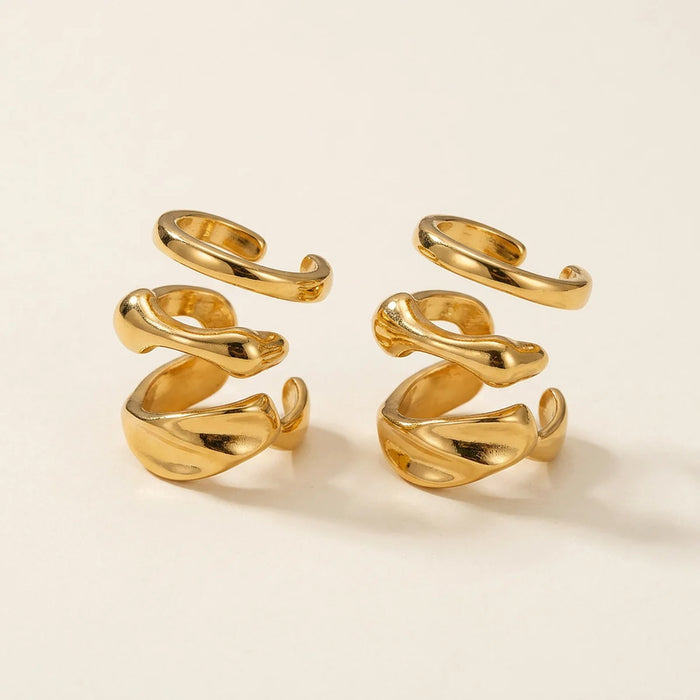
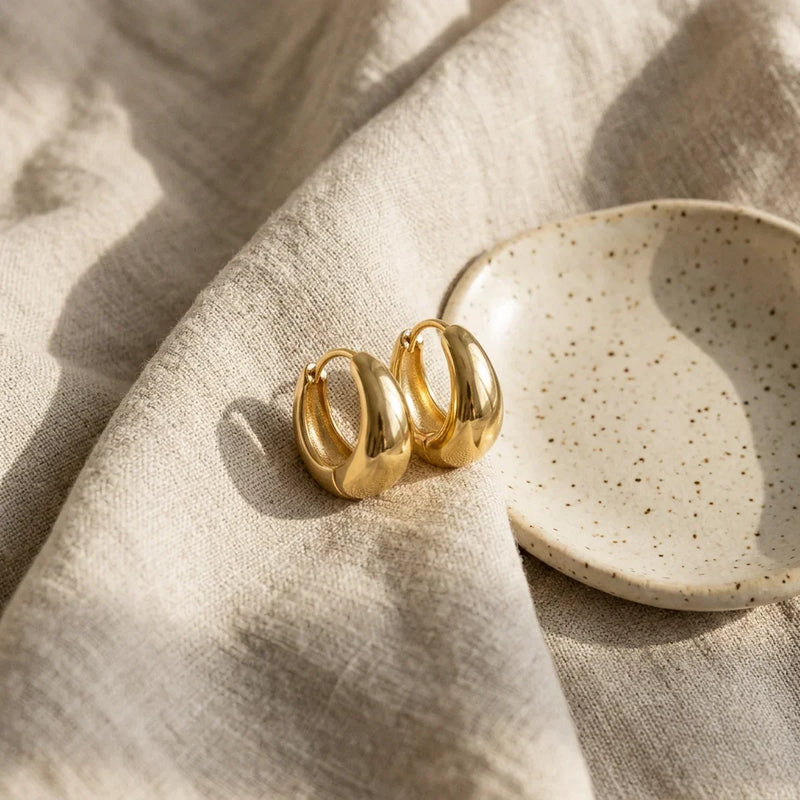
- Gold ear cuff: a chunky, sculpted band in gold-tone stainless steel that clips onto the cartilage, no piercing needed.
Mix one or two of these with the studs you already own and you have the start of a balanced ear. Add pieces slowly, one placement at a time, and let your ear shape guide where the next one goes.